

Quick Answer:
LightWave® flexible LED sheets can bend around curved columns and architectural forms where rigid LED panels cannot follow the surface. Their under-7-mm profile also fits shallow construction details while the dense LED layout maintains broad illumination across the backlit area. Plan the bend radius, mounting surface, wiring path and diffuser distance before installation, then test the complete assembly to confirm uniformity around the curve.
Curved surfaces defeat most lighting products for a simple geometric reason. An LED strip bends along its length but not across its width, so wrapping a column with strips produces a series of vertical lines rather than a lit cylinder. A rigid panel does not bend at all. The usual workaround — many short segments approximating the curve — leaves a faceted surface with a visible seam at every facet.
A flexible LED sheet under 7mm follows the curve directly. LightWave® Roll It! extends that to continuous runs up to 40 feet, which means a column, a curved feature wall, or a radiused millwork return can be lit as one uninterrupted surface.
Why are curved surfaces difficult to light evenly?
Strips bend in one axis only
A strip is a narrow circuit board. It flexes readily along its length, which is why it suits coves and channels, and resists flexing across its width. Wrapping a column means running strips vertically down the face at intervals, and the gaps between those runs stay visible unless there is enough depth behind the face material for them to blend — which on a column there rarely is.
Compound curvature
A cylinder curves in one direction. A dome, a bullnose, or a curved-and-tapered column curves in two, and a material that only bends in one axis will wrinkle or lift when forced onto it. This is where segmentation usually begins, and where the seams start.
Tight radii
Small-radius returns on millwork — a rounded corner, a curved reveal, the edge of a bullnose counter — concentrate the problem. The tighter the radius, the more segments a rigid or single-axis product needs, and the more visible the interruptions become across a short span.
How does a flexible LED sheet light a curved surface?
Thin enough to conform
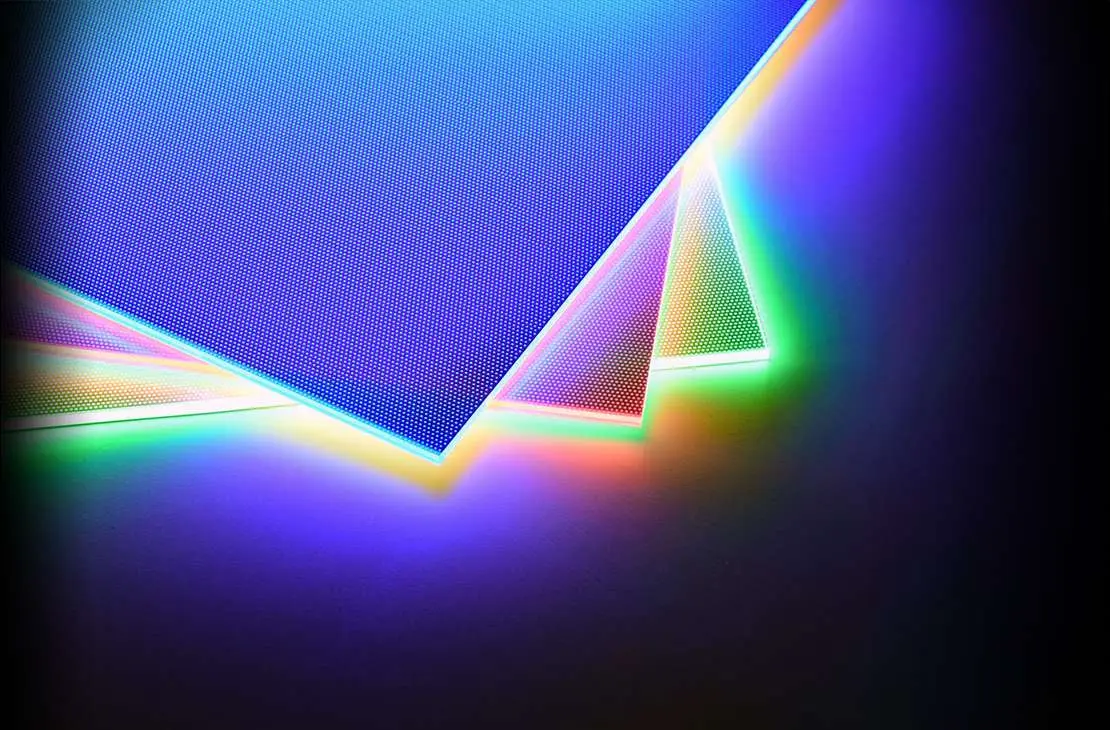
LightWave sheets are under 7mm. Thin material accommodates a tighter radius before it resists, which is what allows the sheet to wrap pillars, curved millwork, and tight returns without lifting away from the substrate at the apex of the curve. This flexibility is a core property across LUXX’s flexible LED light sheets range, not a feature unique to one product.
Density holds evenness through the bend
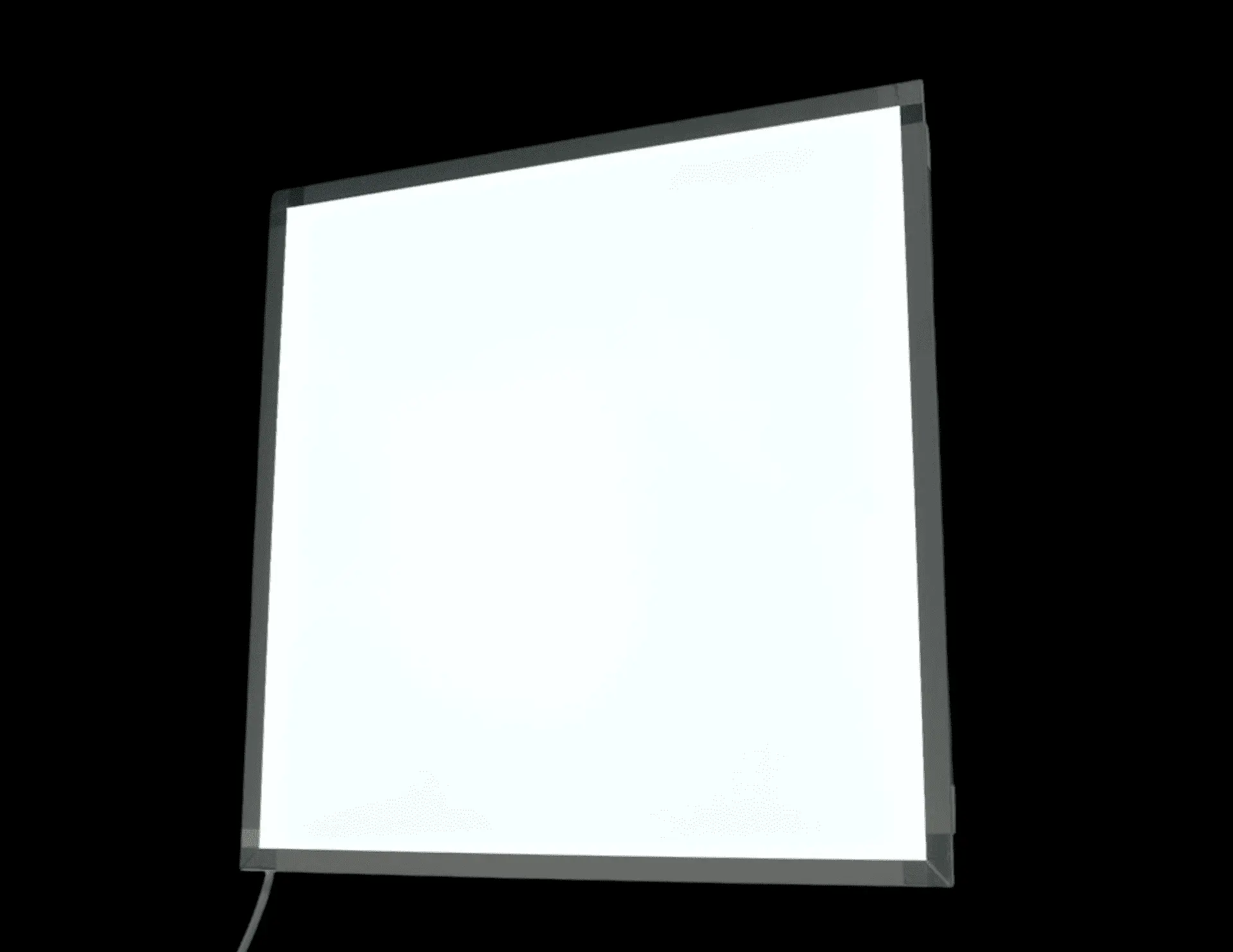
Roll It! carries 324 LEDs per square foot. Because the emitting sources are dense and distributed across the sheet rather than concentrated in lines, the output stays even as the surface curves away from the viewer. There are no gaps that widen or narrow as the geometry changes.
Continuous runs remove the seams
Roll It! is 4 inches wide in continuous lengths up to 40 feet. A column can be wrapped helically or in continuous vertical passes with no join, and a curved feature wall can be run in single lengths. Removing the joins is the direct fix for the faceting problem — the seams are not hidden, they simply are not there.
Combining with cuttable products
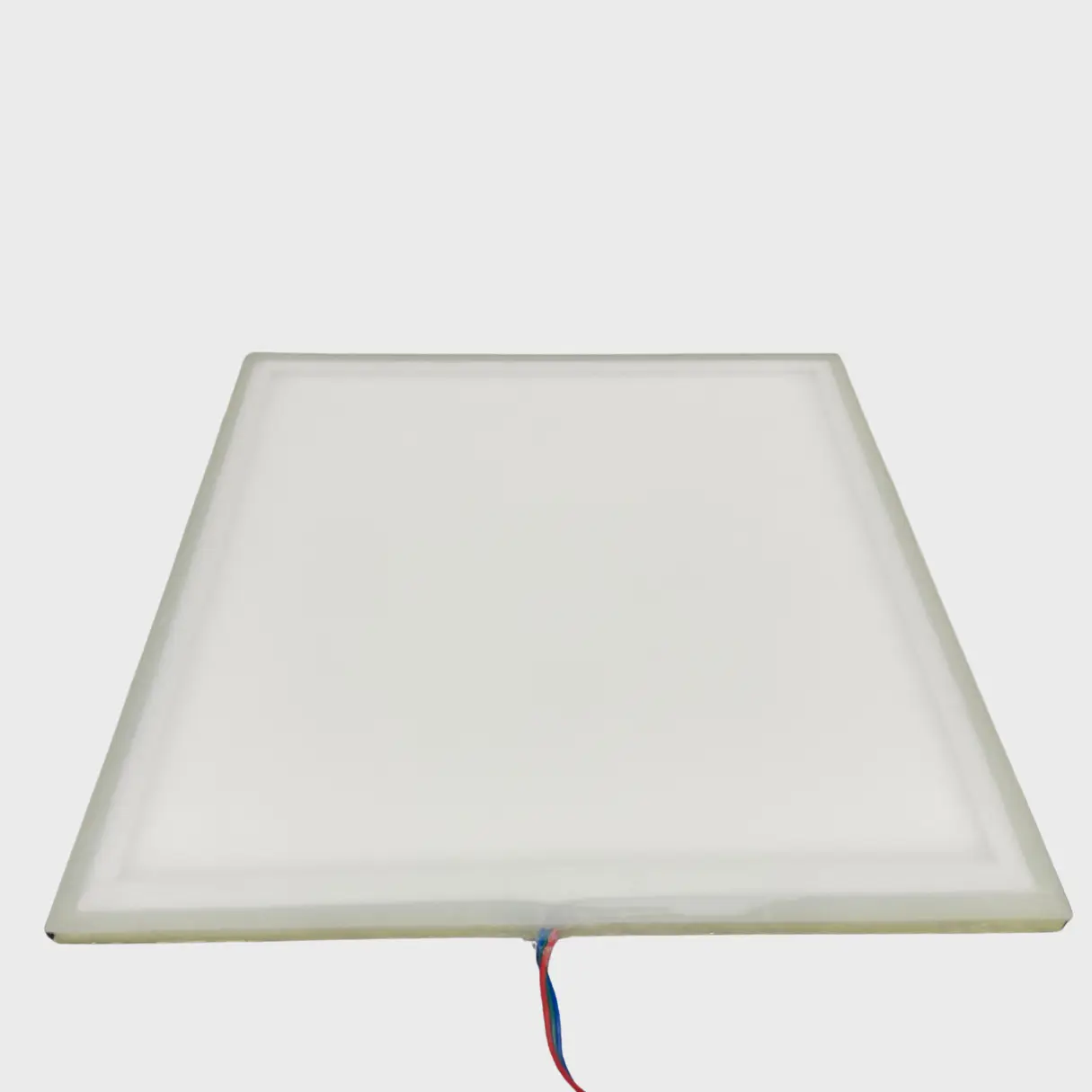
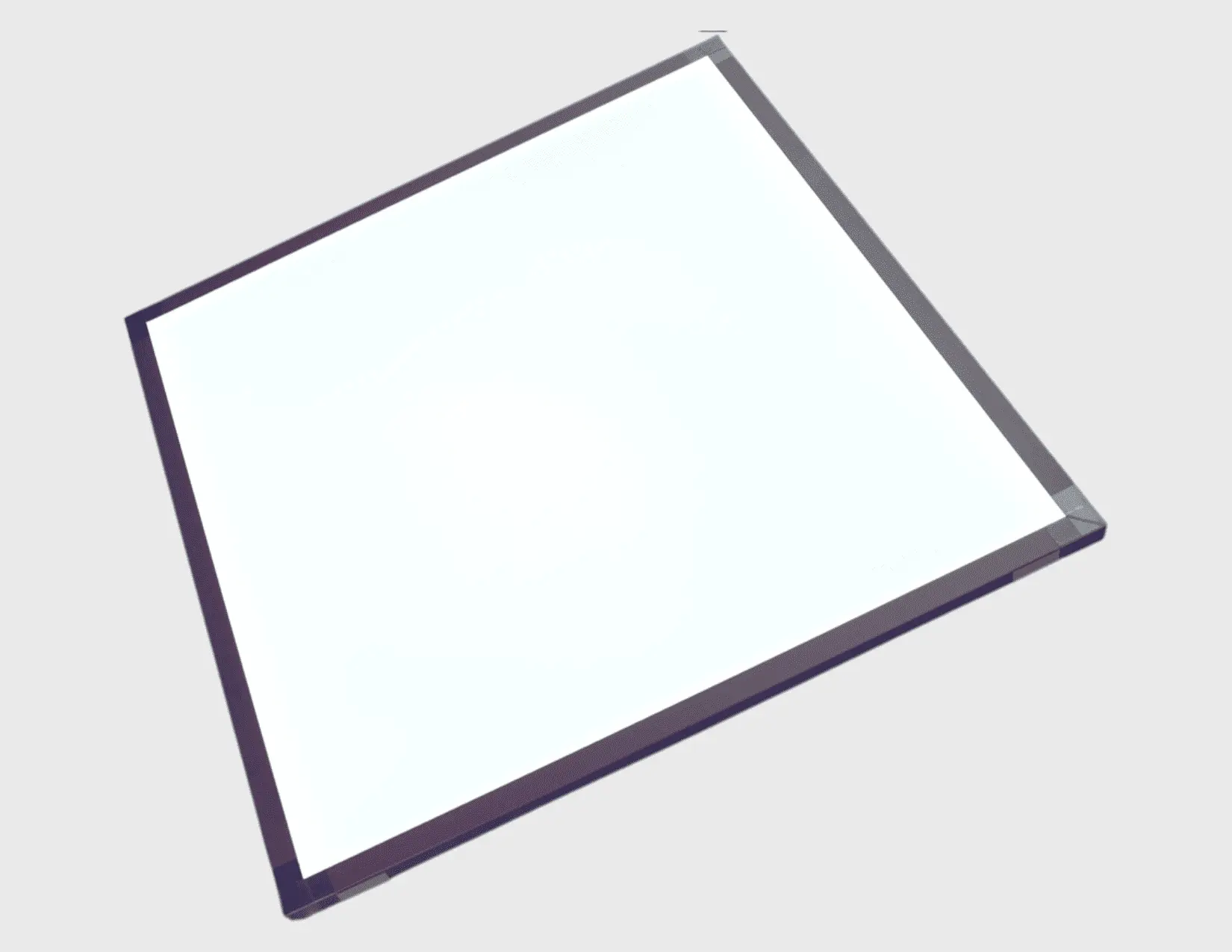
Roll It! is designed to combine with the cuttable LightWave products. A curved run handled by Roll It! can meet cut Generation 1 Plus at the flat returns, caps, and irregular terminations at either end. Match color temperature across products at specification so the transition is invisible. The same continuous-run principle is what removes scalloping in architectural cove lighting.
How do you specify a curved installation?
Confirm the radius
This is the first number to establish and the one most often assumed. Send the actual radius of the tightest curve in the installation with the quote request. A radius that works on a 600mm-diameter column is a different proposition from a 40mm bullnose return, and the answer determines whether the sheet wraps continuously or the detail needs rethinking.
Substrate preparation
Adhesive mounting on a curve is less forgiving than on a flat surface, because the material is under continuous tension trying to return to flat. The substrate must be clean, dry, and free of dust and release agents, and the sheet must be applied progressively rather than positioned and pressed. Adhesive failures on curved work are almost always preparation failures, and they typically show at the tightest part of the radius first.
The face material has to curve too
Backlighting a curved surface means the diffusing face must also be curved, and thermoformed or cold-bent acrylic changes thickness slightly through the bend. That variation affects transmission. Where the curve is tight enough for this to matter, mock it up rather than calculating it.
Power and color
Roll It! draws 2.15W per foot (6.6W per square foot) in its higher-efficacy configuration at 130 lm/W, and 3.5W per foot (10.7W per square foot) across the wider 1800K to 6500K range. Ra 80+ is the correct specification for architectural feature work — nobody evaluates an object’s color against a lit column. Order the full quantity as a single batch so that a continuous curved surface reads as one field; LUXX bins within a 3-step MacAdam standard, which is what makes that achievable.
Which curved surfaces can be lit this way?
- Structural columns and pillars in lobbies and atria
- Curved feature walls and radiused partitions
- Bullnose counters, bar fronts and reception desks
- Rounded millwork returns and reveals
- Cylindrical retail displays and product plinths
- Curved soffits, bulkheads and ceiling features
- Spiral and curved stair balustrades
Where a curved surface also needs to animate rather than hold a static wash, see dynamic LED feature walls.
Use case example: illuminated atrium columns
Four structural columns in an atrium, each roughly 600mm in diameter and 4 meters tall, clad in thermoformed translucent acrylic with under 30mm behind the face. The requirement is that each column reads as an evenly lit cylinder from every approach.
A vertical strip layout fails here for a geometric reason rather than a quality one: strips bend along their length but not across their width, so they produce a series of vertical lines down the column, and the effect worsens where the surface curves away from the viewer. At under 7mm a sheet conforms to the curve directly.
Roll It! applied in continuous vertical passes lets each column power as a single section with no seams. Two details matter. Thermoformed acrylic thins slightly at the tightest part of the curve, which can show as a marginally brighter band until the gap is adjusted — worth mocking up rather than calculating. And all four columns supplied from one production batch, so they match across the space.
Product Line
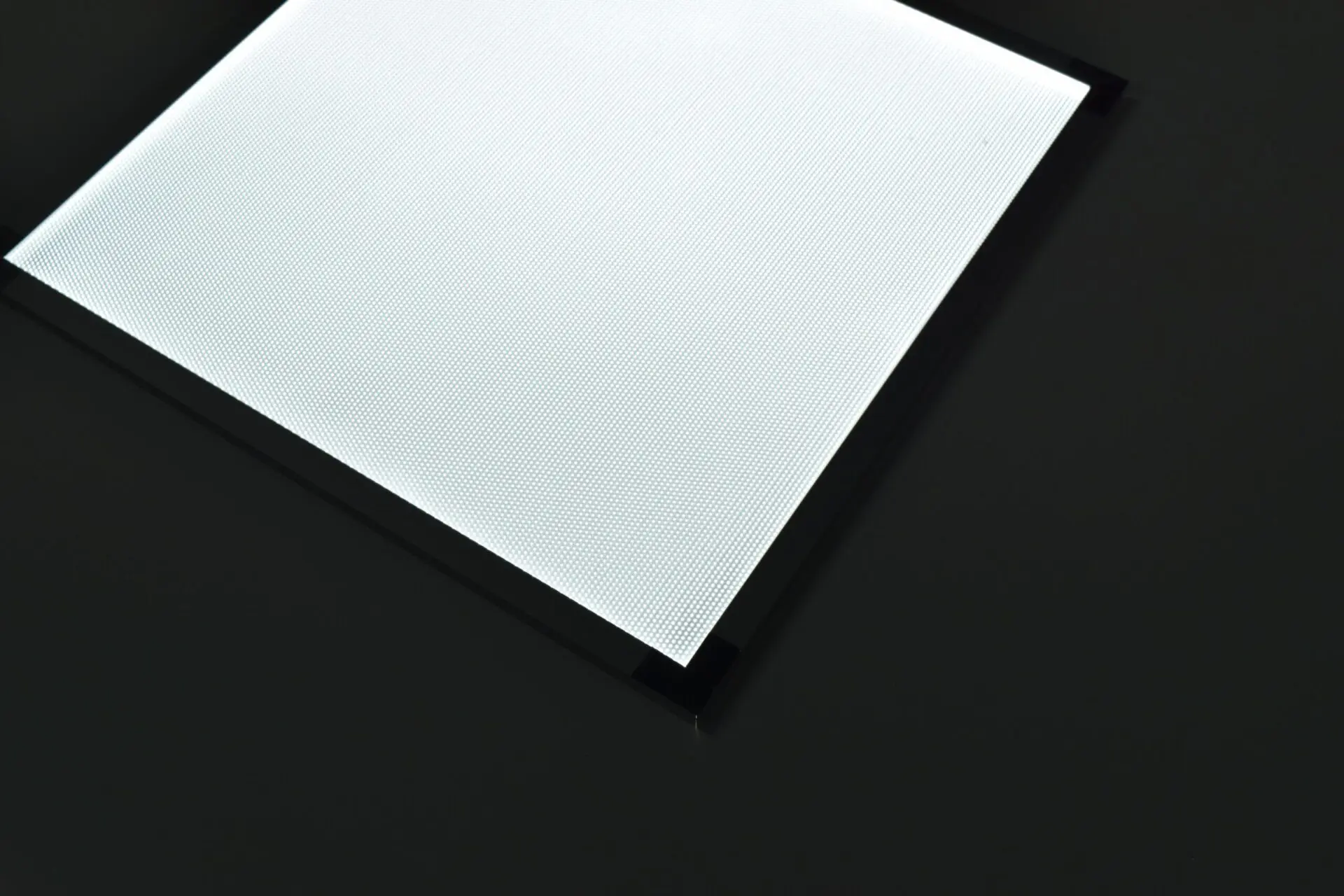
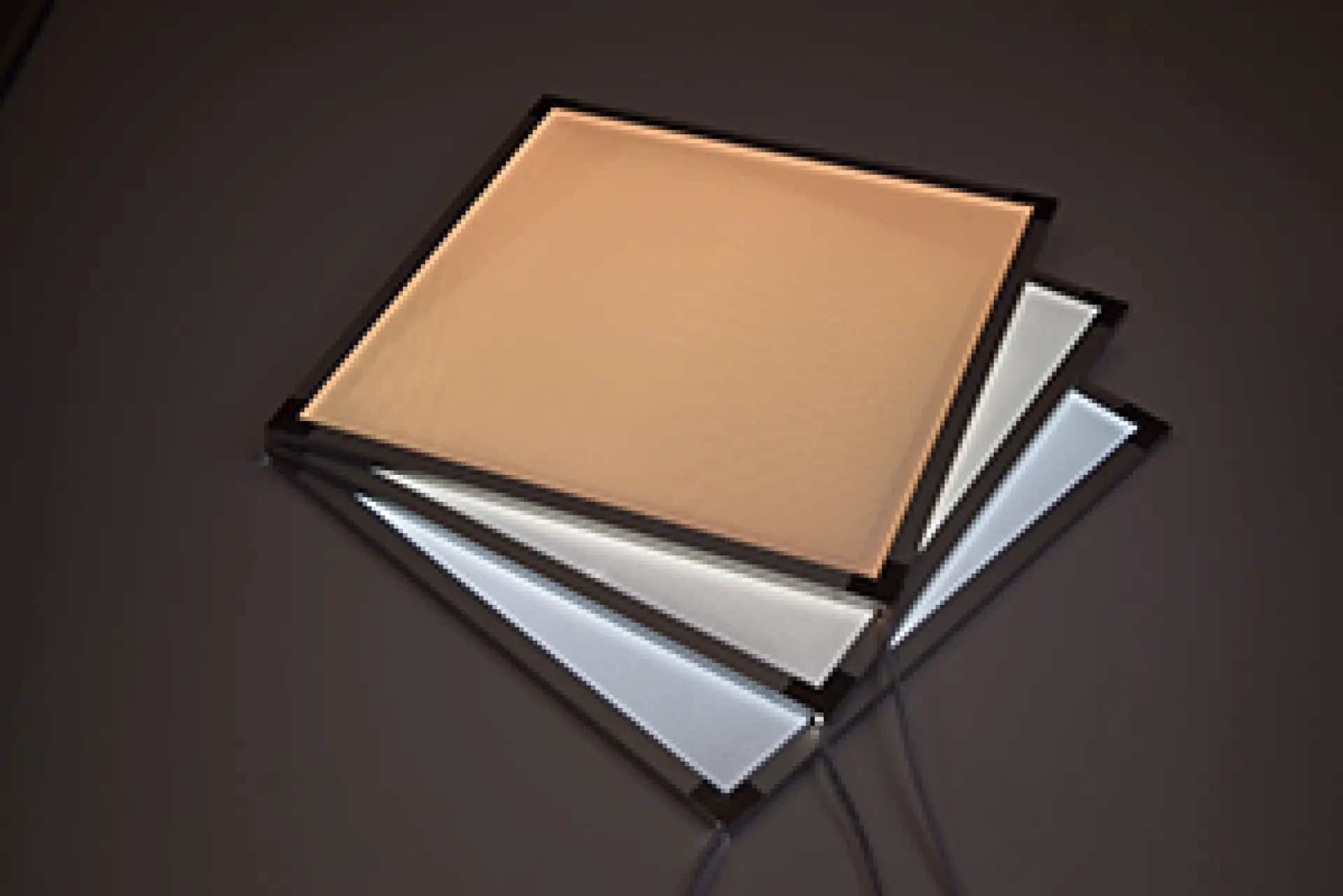

LightWave® products used for this application:
- Generation 1 Plus — Ambient ceilings
- Roll It! — Ceiling bands and coffers
Specify with: power supply calculator · tunable white LED sheets