Quick Answer:
Every LightWave® product has a total profile under 7 mm, including the LEDs. Total cavity depth is the profile plus the air gap the finished surface needs.
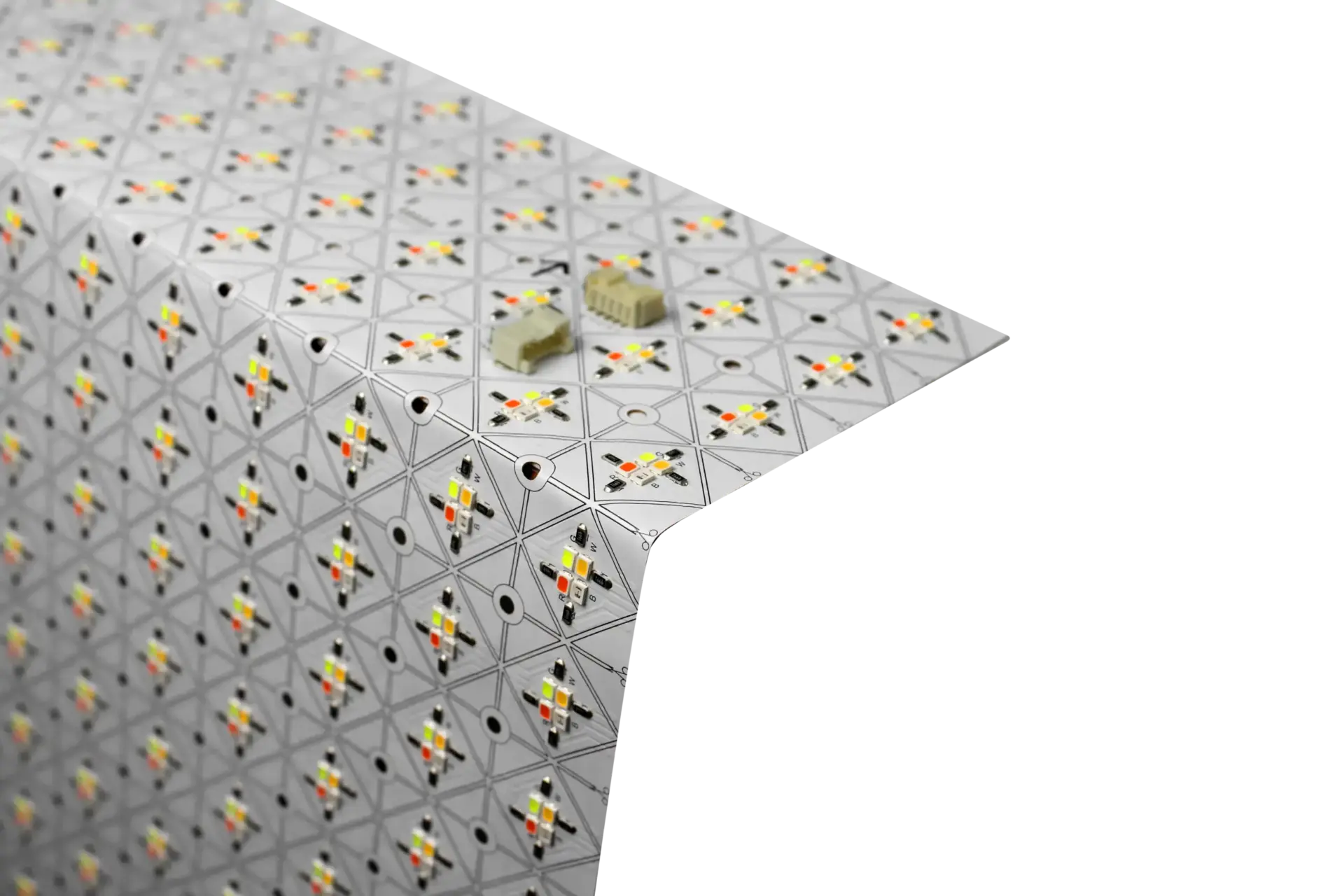
Every LightWave® LED light sheet ships under 7 mm thick — thin enough to fit inside shallow millwork cavities, integrated furniture, retrofit soffits, and sign frames where a traditional LED panel simply will not go. Thinness is the reason a fabricator or specifier reaches for a flexible LED sheet in the first place; it is what makes hidden, seamless backlighting possible on real projects with real depth constraints.
Searching for an ultra thin LED panel? LightWave® sheets are the flexible answer — under 7 mm, cuttable, and bendable where rigid panels can’t go. Under 7 mm is the ceiling across the whole LightWave® flexible LED light sheet line — Gen 1 Plus, CH2, PIXX and Roll It! all share the same slim profile.
What Is an Ultra-Thin LED Light Sheet?
An ultra-thin LED light sheet is a flexible LED backlighting panel built on a low-profile substrate — thin enough that the sheet disappears into the fixture instead of dictating the fixture’s build depth. In practical terms, “ultra-thin” means the sheet can live inside a cavity or behind a diffuser without adding meaningful build-up.
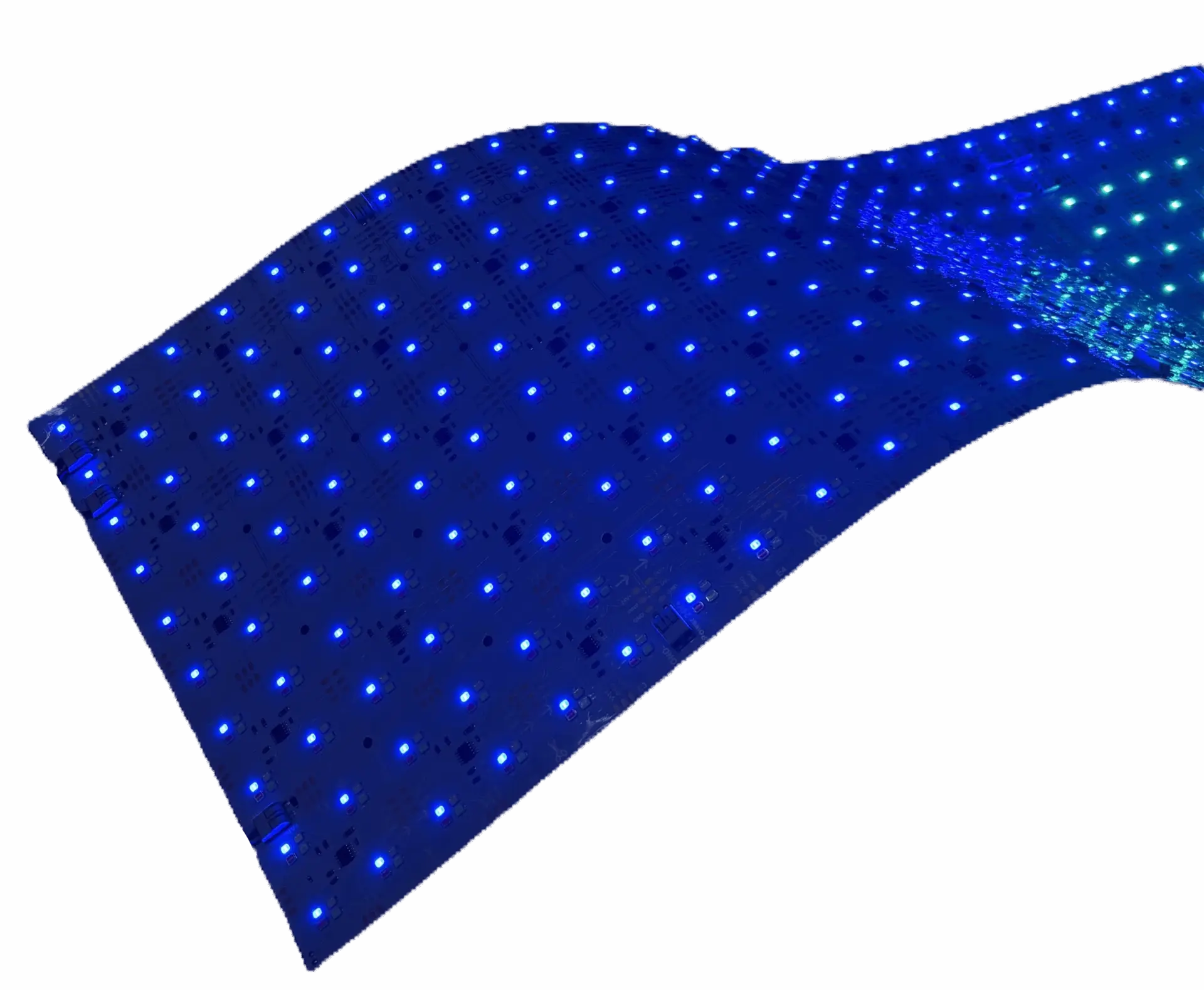
LightWave® holds a full-line commitment to under 7 mm — no variant breaks that ceiling — so a specifier can pick the right color or control type (single color, tunable white, RGBW, or addressable PIXX) without having to re-engineer the cavity depth of the fixture.
What does an under-7 mm LED sheet make possible?
Sub-7 mm profile is the difference between “we can integrate it” and “we need to redesign the fixture.” Specific things it enables:
- Retrofit installs — drop LightWave into an existing cavity, soffit, or fixture without deepening it
- Hidden source millwork — the light hits the forward material, the source stays completely invisible
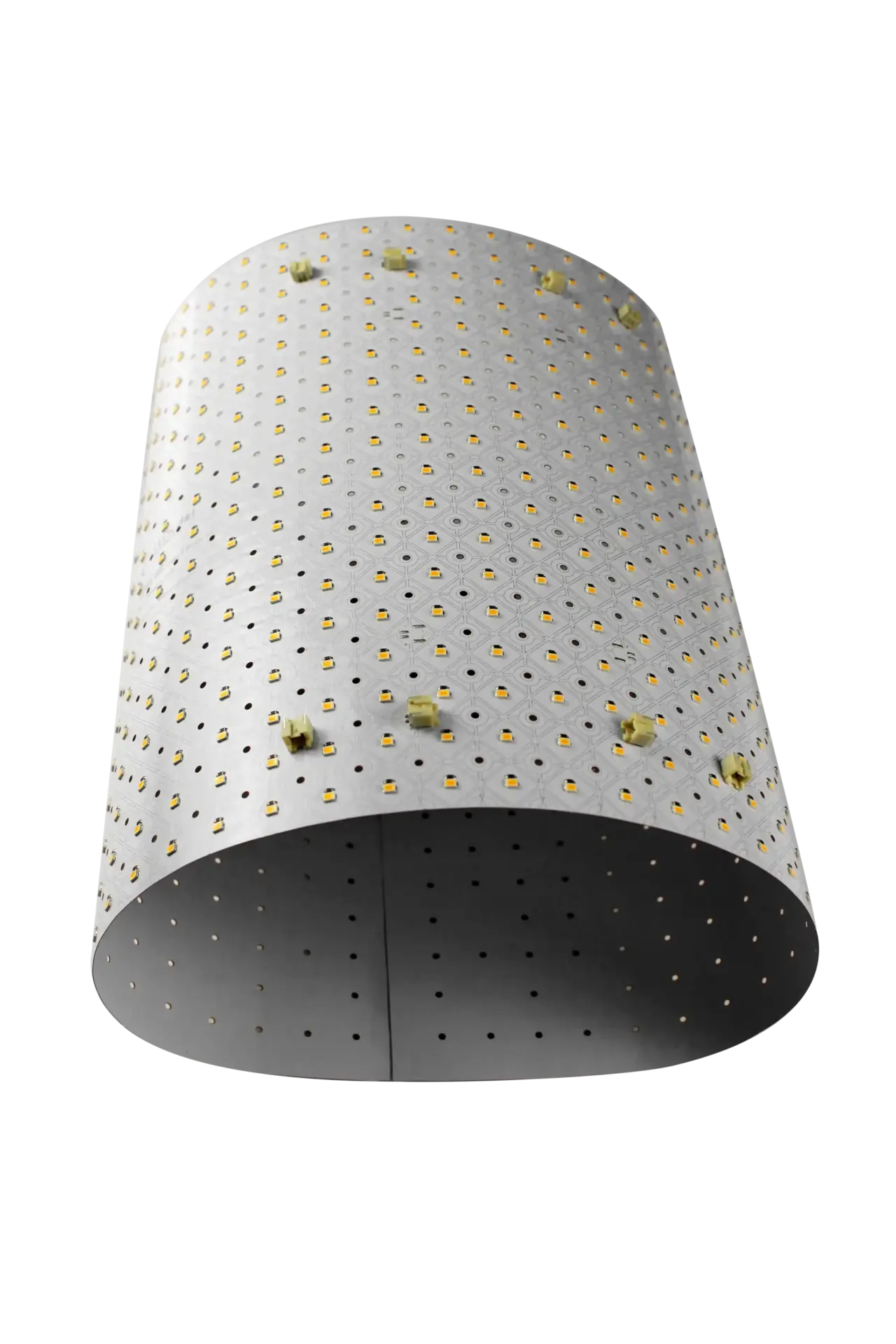
- Curved and radiused surfaces — the sheet bends around columns and tight radii while staying even, so curved column lighting becomes possible
- Thin display cases and shelves — behind transparent or translucent goods without adding shelf depth
- Backlit onyx and stone slabs — glow through backlit onyx and translucent stone without the countertop needing to be built out to accept a thick fixture
- Signage retrofits — replace older, thicker backlighting inside existing channel-letter or lightbox frames
How thick is an LED light sheet?
Thickness has three parts: the circuit sheet, the LEDs on it, and the connector. Every LightWave® product has a total profile under 7 mm, including the LEDs, so you can plan the cavity with confidence.
| Variant | Format | Total profile |
|---|---|---|
| Generation 1 Plus | 12″ × 24″ sheet | < 7 mm |
| CH2 | 12″ × 24″ sheet | < 7 mm |
| PIXX | 9.25″ × 19.8″ sheet | < 7 mm |
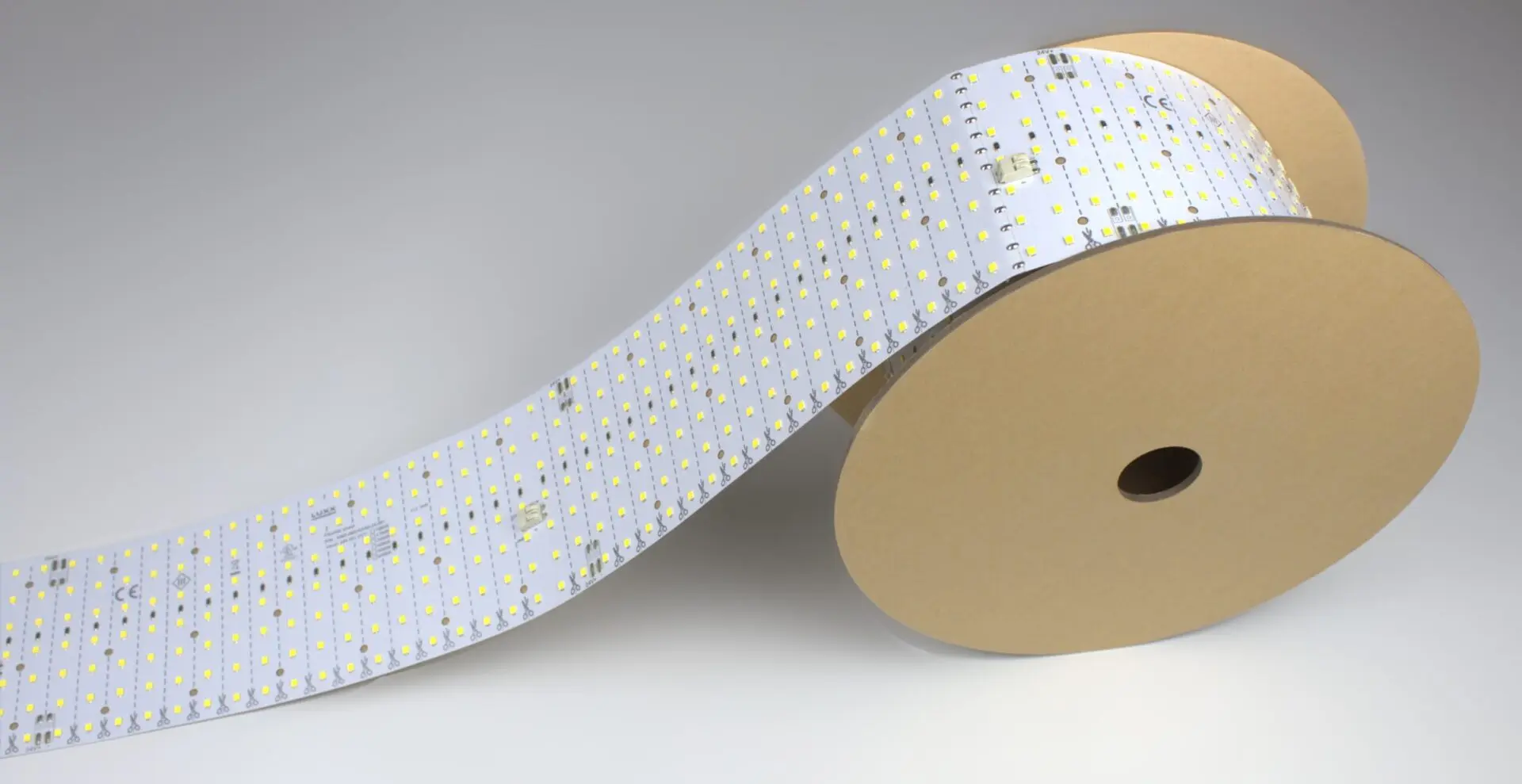
| Roll It! | 4″ wide roll | < 7 mm |
Total installed depth = total profile + the air gap your surface needs. See heat and hotspot management.
How does an ultra-thin sheet compare with strips and panels?
How LightWave’s sub-7 mm profile compares to other backlighting approaches typically specified for the same use cases:
- Edge-lit LED panels — usually 8–12 mm and rigid; will not bend, will not cut to shape
- Direct-lit LED backlight modules — often 20–40 mm deep to hit even illumination; rules them out of any shallow cavity
- Fluorescent lightbox tubes — legacy option typically 25 mm+ plus ballast depth; also much lower efficiency
- Standard LED strip in aluminum extrusion — the strip is thin, but the extrusion adds 8–15 mm; also gives a line of light, not an evenly-lit surface
Sub-7 mm plus flexibility is the combination that lets one product cover both flat and curved surfaces in cavities other LED formats will not fit.
Where does an ultra-thin LED sheet fit best?
- Shallow millwork cavities — cabinet backs, integrated shelving, hidden coves
- Retail fixtures — retail display backlighting where shelf depth is fixed
- Curved columns and radiused millwork — the under-7 mm profile bends around tight radii without stress cracking or losing evenness
- Backlit stone and onyx countertops — backlit stone installs where the countertop assembly cannot be deepened
- Signage retrofits — existing channel letters, lightboxes, and back-lit sign frames with fixed internal depth
- Integrated furniture and cabinetry — hidden under-cabinet, in-cabinet, and reveal lighting
- Aircraft, RV and marine cabinetry — anywhere weight and depth both matter
HHow do you avoid hotspots in a shallow cavity?
Thin form factor has a real trade-off: less air gap between the sheet and the forward material means less room for heat dissipation and less room for the LED beams to spread evenly before hitting the diffuser. Two mitigations:
- Screw spacer set — holds the sheet off the forward material by a controlled distance, giving the LED beams room to spread (kills hotspots) and airflow room to dissipate heat
- Diffuser choice — a slightly frostier diffuser evens out short-throw hotspots in shallow enclosures
For a full walk-through of heat and hotspot control in shallow cavities, see our LED light sheet heat management guide.
How do you install an ultra-thin LED sheet?
Install is the same across all four ultra-thin variants — cut along marked lines to size (see cuttable LED sheets), peel the adhesive backing, apply to a clean flat or gently curved surface, connect to a matched driver. Use the screw spacer set for installs behind fabric, diffuser or translucent-material fronts to control hotspots and dissipate heat.