

Quick Answer:
LightWave® LED sheets can turn feature walls into illuminated architectural surfaces using tunable white, RGBW or addressable pixel control depending on the required effect. PIXX adds individually controlled RGB and white pixels for animated patterns and dynamic content, while RGBW provides color effects with dedicated white light. The flexible sheet format also works behind translucent materials, allowing designers to integrate illumination directly into custom wall construction.
A dynamic feature wall is a surface that moves. Not a wall that changes color on a schedule — that is a simpler and much cheaper specification — but one running gradients, sweeps, chase effects, or programmed sequences across its face. Motion is what separates the two, and it is the only reason to reach for addressable pixel control.
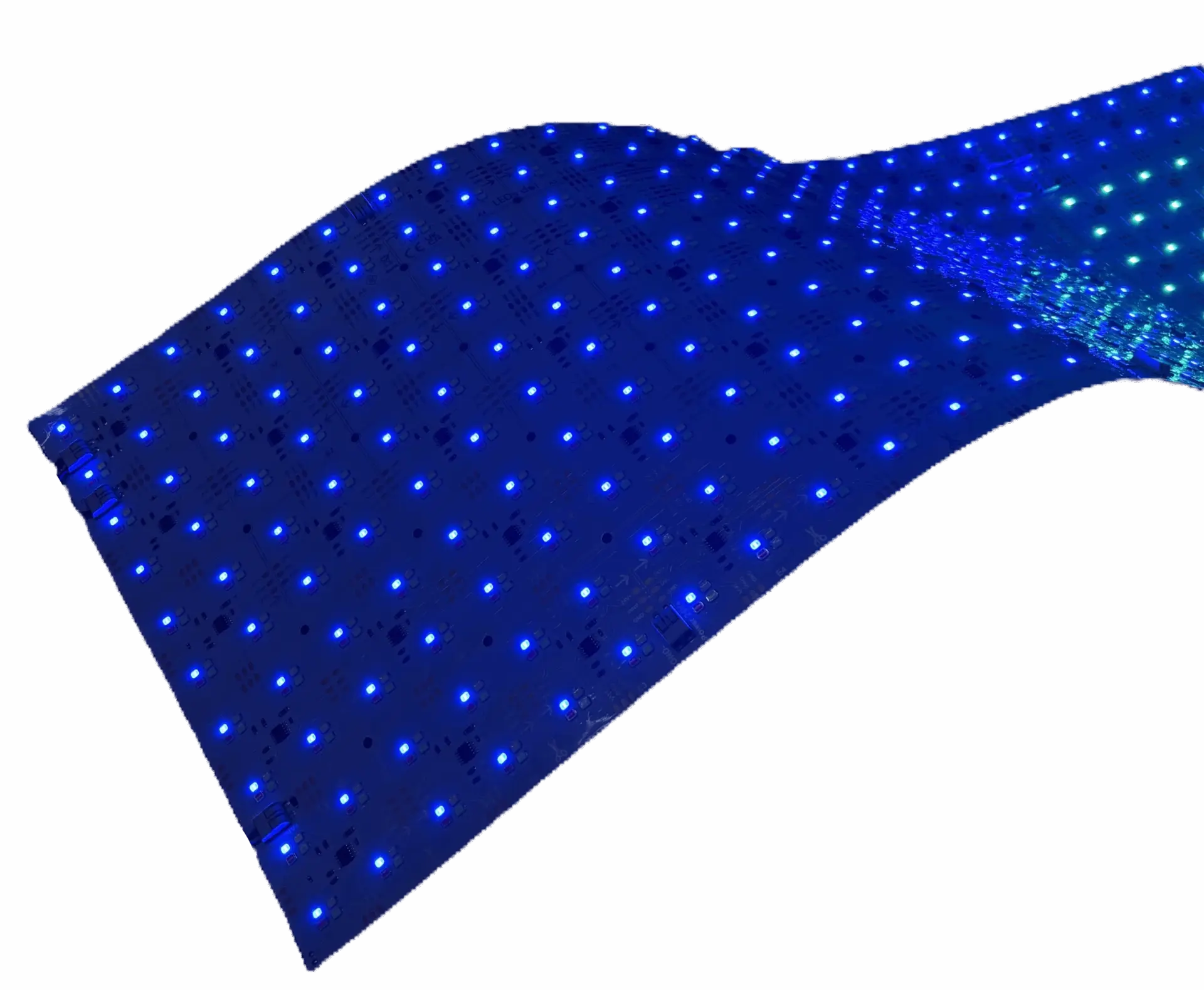
LightWave® PIXX provides that control: RGBW flex sheets with SPI addressing, driving each pixel independently. Sheets are 9.25 by 19.8 inches, carry 800 LEDs in four groups of 200, draw 35W, and produce 810 lumens at 5000K. PIXX is the addressable member of LUXX’s flexible LED light sheets range.
Do you need addressable PIXX or is RGBW enough?
Addressable control is only required when the surface must show motion, gradient or content. If it holds one color at a time, RGBW is correct and far cheaper. This decision determines the budget, the infrastructure and the commissioning effort, and getting it wrong in either direction is expensive.
What RGBW gives you
An RGBW sheet sets the entire surface to one color at a time, fading between states. Generation 1 Plus RGBW runs four channels at 4W each; CH2 RGBW runs four channels at 11W each and reaches CRI 90. If the brief is a wall that glows deep blue, shifts to amber for an event, and holds white for daytime, that is an RGBW job. It draws a fraction of the power, needs no pixel controllers, and involves no programming phase. This same RGBW-vs-PIXX decision comes up constantly in bar and restaurant back-bar lighting.
What PIXX adds
PIXX drives zones within the sheet independently, which is what makes gradients, animation, and content-driven output possible. Power density is 27.5W per square foot — substantially above the static products — because pixel control distributes drive electronics across the sheet.
The test
Ask whether anything needs to move. If the surface holds one color at a time, specify RGBW and spend the difference elsewhere. If the design genuinely requires motion, gradient, or programmed sequence, PIXX is the only option that will satisfy it.
The common failure is specifying addressable for a project that will only ever display static color, paying for controllers, higher power infrastructure, and a commissioning phase that never gets used. The opposite failure is rarer and much harder to remedy, because an RGBW installation cannot be made to animate later without replacing the sheets. Where there is genuine uncertainty about future use, that asymmetry is worth weighing.
How do you plan an addressable LED installation?
Power density drives the infrastructure
At 27.5W per square foot, a dynamic wall of any size represents a substantial connected load, and this needs to reach the electrical design early. A hundred square feet is roughly 2.75kW before headroom. Calculate the total against the actual lit area, size drivers with margin above it, and confirm the supply is available at the wall location — this is not a load that can be picked up from a convenient nearby circuit.
Data as well as power
PIXX uses SPI control, which means a data path alongside the power distribution. Signal routing, controller location, and cable runs all need to be designed rather than resolved on site. Confirm the controller and protocol with the controls contractor before the package is ordered, since data topology is considerably harder to correct after the wall is faced.
Pixel pitch and viewing distance
PIXX carries 628 LEDs per square foot in four groups of 200 per sheet, and the resolution of the effect is set by the zone structure rather than by the diode count alone. That makes viewing distance a design input: an effect that reads as a smooth gradient across a lobby will resolve into discrete zones when viewed from a metre away. Establish the closest realistic viewing position early, and mock it up at that distance rather than at the distance the render was drawn from.
Content is a work package
This is the item most often missing from a dynamic wall budget. The hardware produces nothing without content, and content requires someone to create, programme, and — over the installation’s life — update it. A wall running the same thirty-second loop two years after opening has stopped being a feature and become wallpaper. Establish at design stage who owns content, how it gets updated, and whether the venue has the capability in-house or needs a service arrangement.
Commissioning and handover
Budget commissioning time properly. Mapping zones, calibrating output, and programming sequences is real work, and it is frequently compressed at the end of a project when the schedule has already slipped. Document the system and hand it to a named owner with training, or the wall will end up running whatever state it was left in.
How is a dynamic feature wall built?
Fitting the architecture
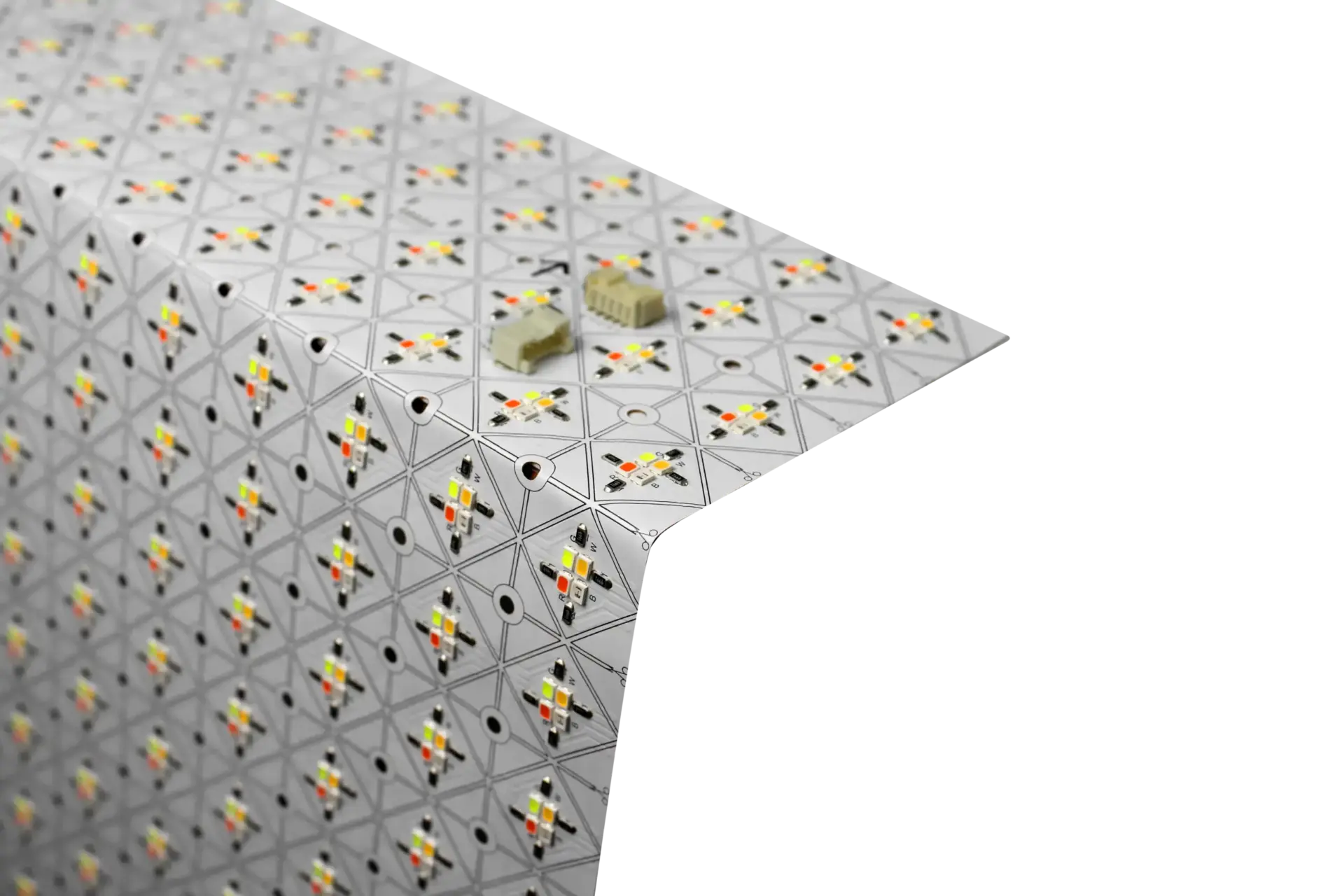
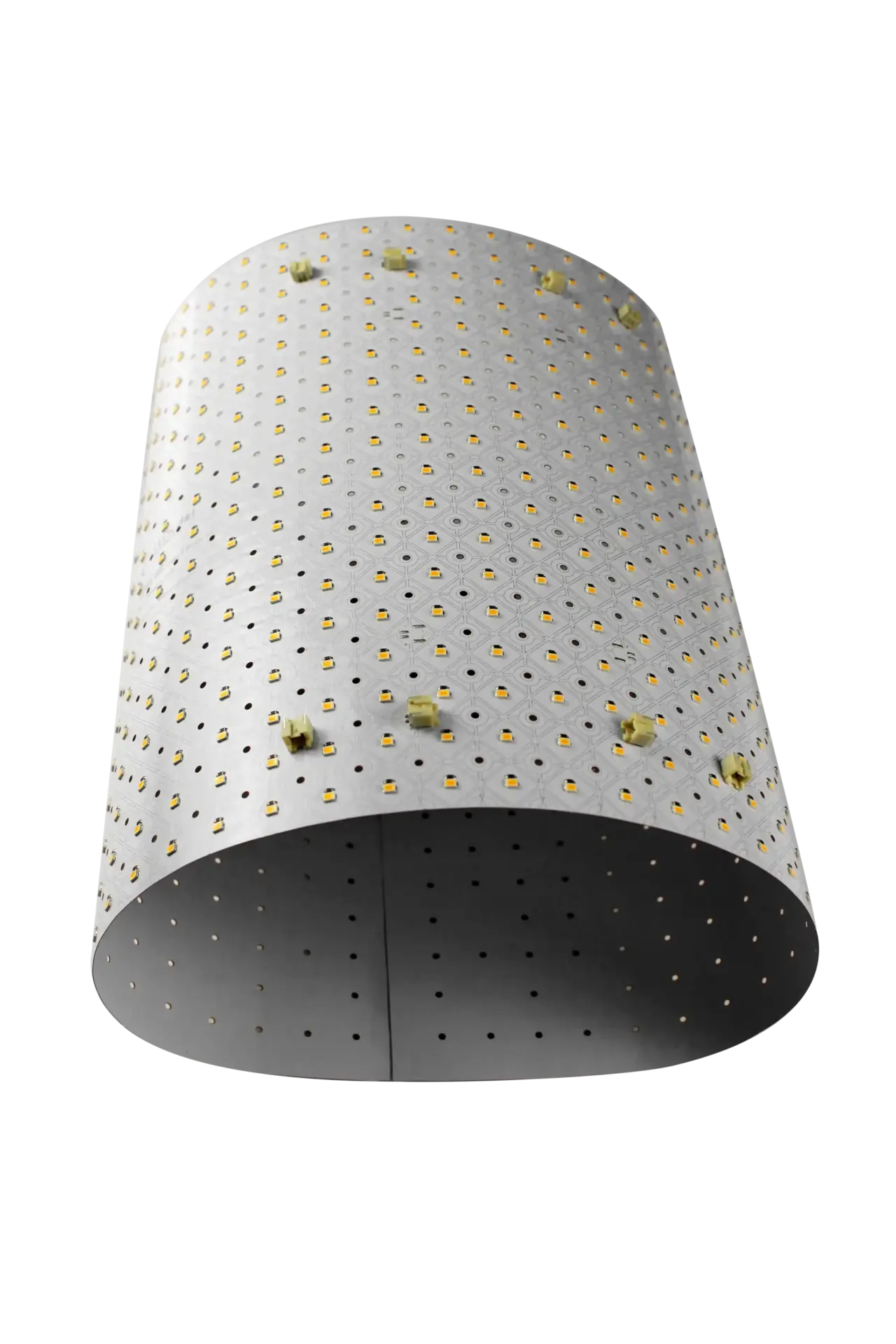
PIXX sheets are under 7mm, cuttable along designated lines, and flexible enough to follow curved and irregular surfaces. That means a dynamic wall is not restricted to a flat rectangle — it can wrap a column, follow a curved partition, or fill a shaped recess. Cut only on designated lines, since cutting elsewhere severs circuit paths. A wall that wraps a column rather than sitting flat should also reference LED for curved surfaces and columns.
The face material
Diffusion choice is a design decision with real consequences on an addressable wall. Heavier diffusion smooths the pixel structure into a continuous gradient but softens the definition of any sharp-edged effect; lighter diffusion preserves crispness but reveals the zone structure. This is the single most valuable thing to mock up before fabrication, because the two properties trade directly against each other and the right balance depends entirely on the content.
Heat and access
At 27.5W per square foot, thermal management matters more than on static installations. The screw spacer set provides thermal clearance alongside its optical function. Plan driver and controller locations for access, since a feature wall in a public space is expensive to open for service — and specify with the assumption that reaching it later will be difficult.
Batch consistency
A feature wall is one continuous surface, viewed as a whole and frequently photographed. Order the full quantity as a single production batch; LUXX bins its LEDs within a 3-step MacAdam standard, which is what keeps the field consistent across sheets. On an addressable wall this matters more than on a static one, because variation that is invisible at one output state can become obvious at another as the content moves through its range.
Which installations suit addressable LED sheets?
- Lobby and reception feature walls
- Dynamic ceilings and illuminated soffits
- Animated backlit signage and brand graphics
- Nightclub, bar and event color surfaces
- Stage sets and performance backdrops
- Interactive and sensor-driven installations
- Retail flagship and window activations
Use case example: a reception feature wall
An animated feature wall of roughly 90 square feet in a corporate reception, running slow gradient sequences through the working day and a brand-color treatment for events. Motion is genuinely required here, so PIXX is the correct specification rather than an over-specification.
At 27.5W per square foot, 90 square feet is roughly 2.5kW before headroom. That figure belongs with the electrical designer before the wall position is fixed, because it is not a load that can be picked up from a convenient nearby circuit, and a late supply problem at a finished reception is expensive.
The diffusion decision is the one to mock up. Design renders are typically drawn from further away than people actually stand: at a reception desk two meters from the wall, a diffuser that looked correct on paper may resolve the zone structure visibly. Heavier diffusion fixes it at the cost of edge definition, which in turn favours gradient content over sharp-edged movement. Content ownership should be assigned at design stage, since a wall running the same loop two years on has stopped being a feature.
LightWave® products used for this application: PIXX — Color that changes through the night
Specify with: power supply calculator · RGBW LED light sheets