

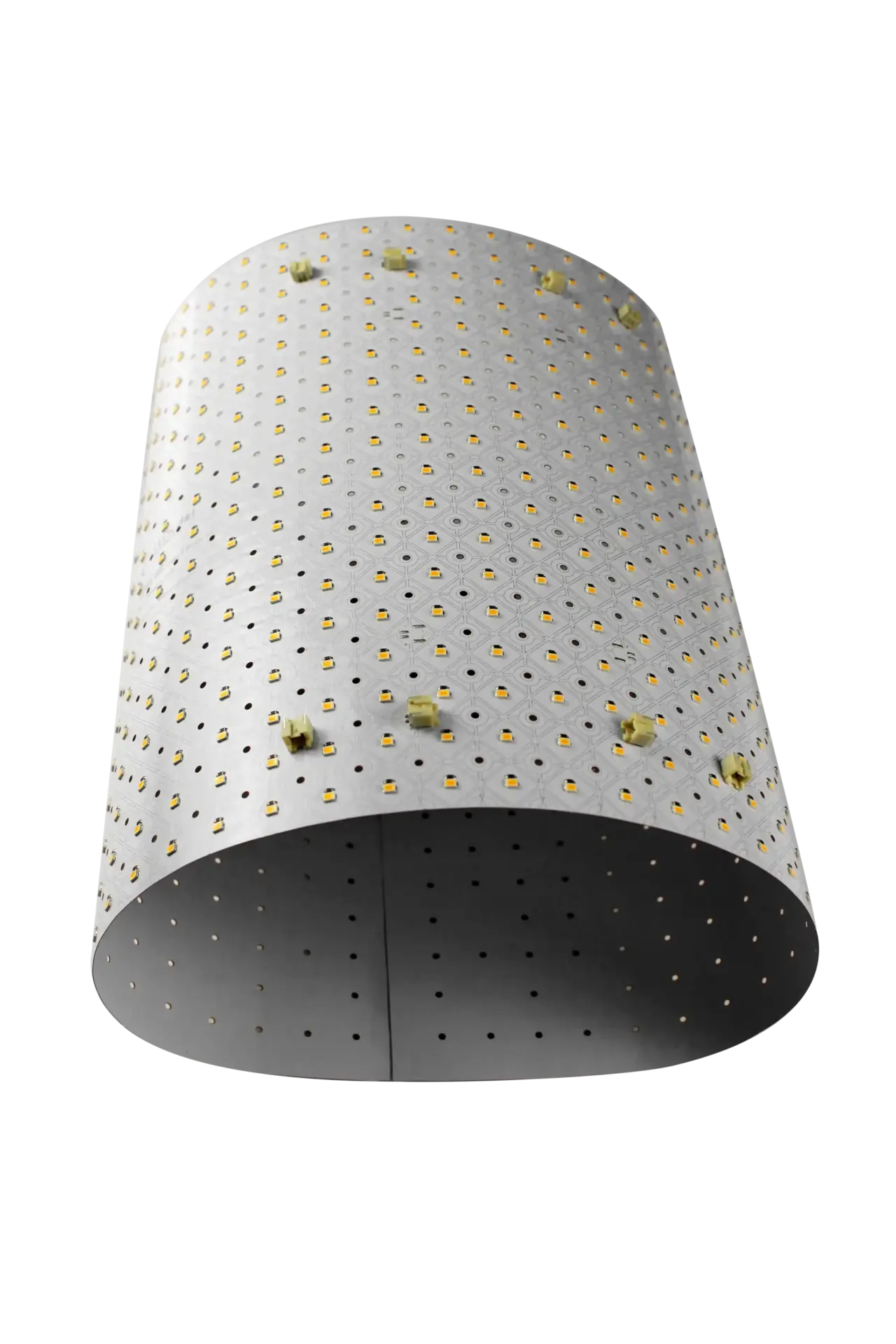
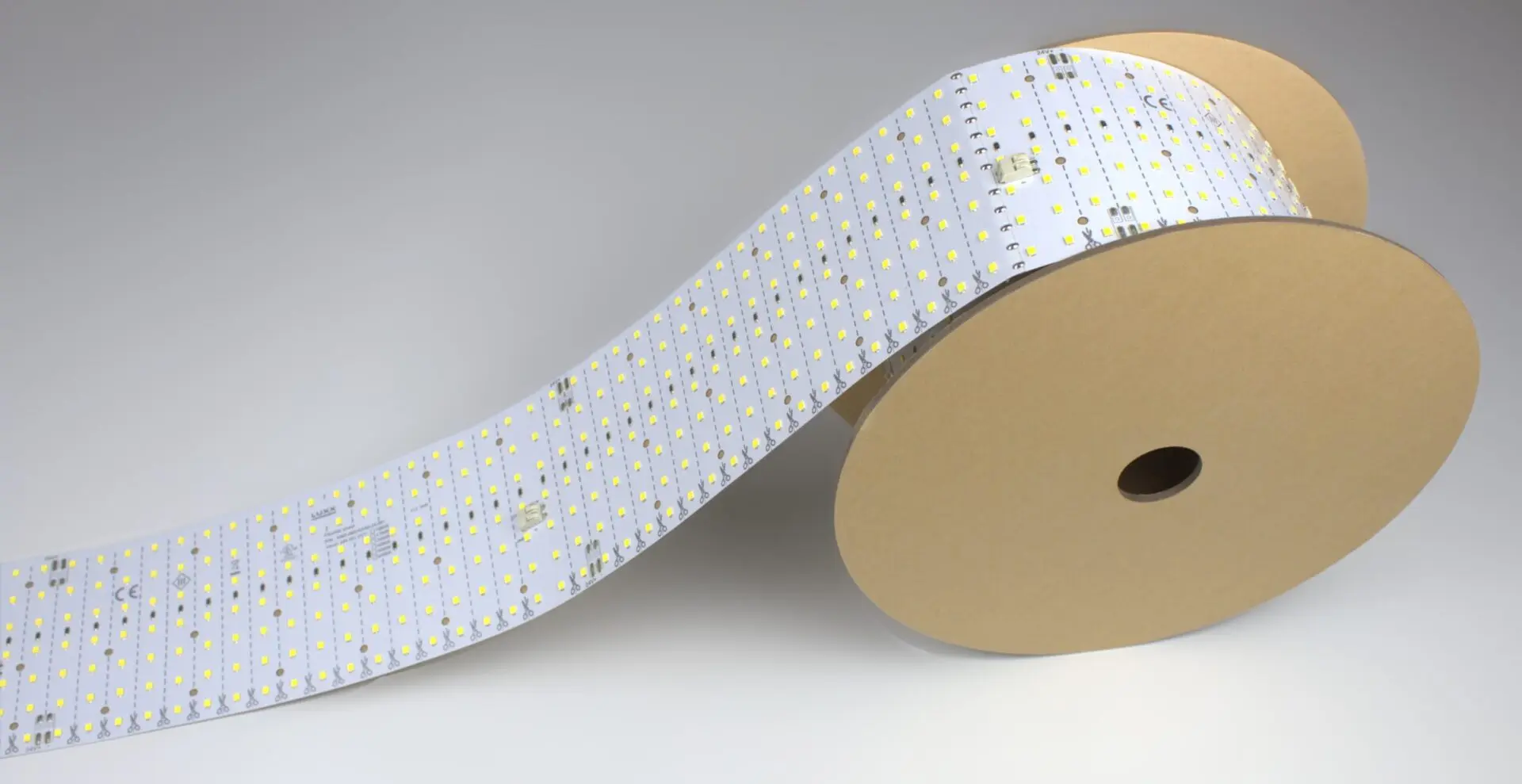
Quick Answer: LightWave® LED sheets give hospitality interiors a flexible way to backlight bars, decorative panels, walls, counters and custom millwork with an even field of light. Tunable-white versions can shift from 2700K to 6500K, while RGBW versions add programmable color effects. Because the sheet is under 7 mm thick and flexible, it can fit shallow details and curved features that are difficult to illuminate with rigid fixtures.
A back-bar is the most photographed surface in most hospitality venues and the one that has to work hardest. It is the visual anchor guests see on arrival, the backdrop to every drink served, and increasingly the reason a venue appears on social media at all. It also has to shift character between a quiet lunch service and a full Friday night, in a space where the lighting sets the entire mood.
That combination — feature surface, variable atmosphere, demanding environment — is why hospitality backlighting is usually a color or motion specification rather than a static white one.
Should a back-bar use RGBW or addressable PIXX?
Specify RGBW if the back-bar holds one color at a time and changes between service periods; specify PIXX only if the surface needs motion. This decision determines the budget, the power infrastructure and the commissioning effort, and it is the one most often over-specified.
RGBW: one color at a time
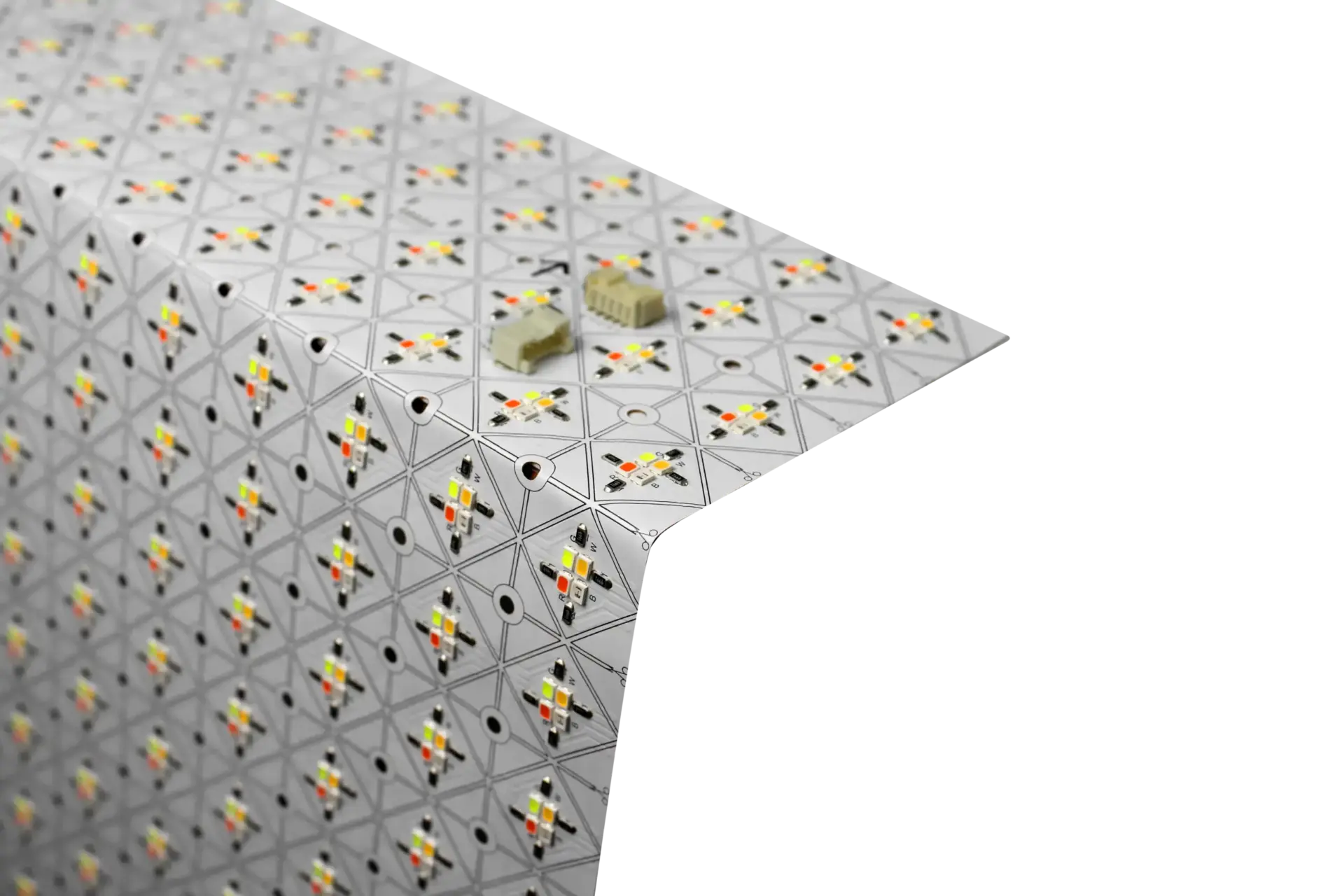
An RGBW sheet sets the whole surface to a single color, fading smoothly between states. Generation 1 Plus RGBW runs four channels at 4W each, producing 490 lumens at 5000K. That covers the majority of hospitality briefs: warm amber through dinner service, a brand color for an event, deeper tones late, a dedicated white channel when the bar needs to be seen properly for stock-taking or cleaning.
PIXX: motion and gradient
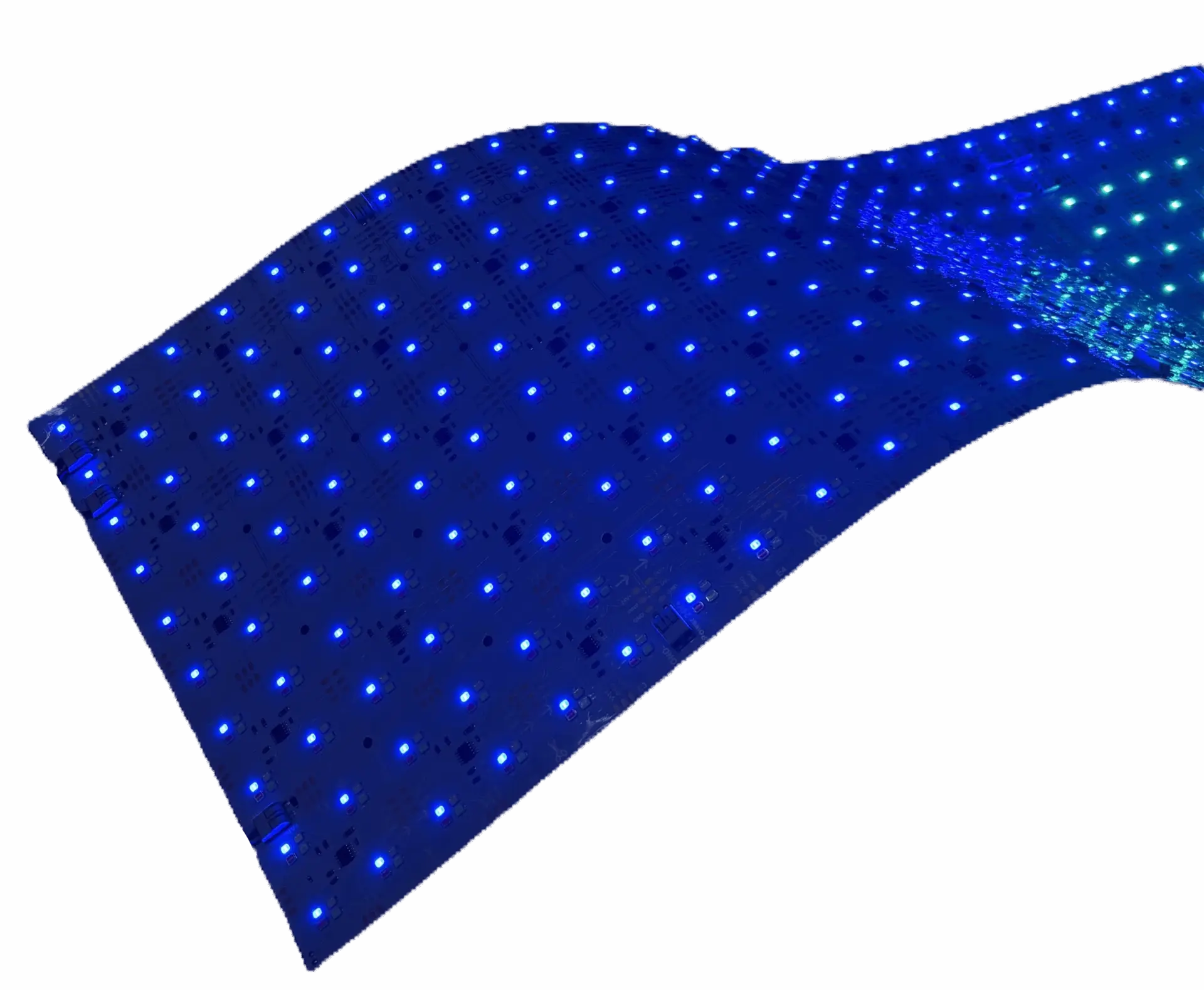
LightWave PIXX adds SPI pixel-level control, so zones within the sheet are driven independently — gradients, sweeps, chase effects, and programmed sequences. PIXX sheets are 9.25 by 19.8 inches, draw 35W, and produce 810 lumens at 5000K, with a power density of 27.5W per square foot. That is substantially above the static products, because pixel control distributes drive electronics across the sheet.
How to choose
Ask whether anything needs to move. A back-bar that glows one color and changes with the service period is an RGBW job, at a fraction of the power, driver, and commissioning cost. A feature wall that runs programmed sequences or reacts to a DJ is a PIXX job and nothing else will satisfy it.
The common failure is specifying pixel control for a venue that will only ever hold a static color — paying for controllers, higher power infrastructure, and a programming phase that never gets used. The opposite failure is rarer and harder to fix, since an RGBW installation cannot be made to animate later without replacing the sheets.
How do you backlight liquor shelves and wine walls?
Backlight the panel behind the bottles, not the bottles themselves. Cut LightWave® sheets to the back panel of each bay, hold a gap behind opal acrylic, glass or onyx, and zone each bay so the display can be dimmed or color-shifted by section. RGBW or PIXX suits bars that change color through the night. Stone wine walls follow backlit onyx walls; bar tops follow backlit onyx countertops, bar tops and islands.
How do you design back-bar lighting?
Bottle shelves and glass
Backlighting behind bottles is the classic back-bar detail and it depends on evenness. Bottles are irregular, partly filled, and made of colored glass, so they interrupt the field unpredictably. A source that is already uneven compounds this into a surface that looks accidental rather than designed. LightWave sheets cut along designated lines to follow shelf backs and irregular joinery.
Shallow joinery
Back-bar millwork is built to hold stock, not lighting. The depth behind a shelf back or panel is whatever the joinery detail permits. Under-7mm sheets fit where a deeper source would require rebuilding the unit, and the screw spacer set fixes the offset from the face material by component rather than by installer judgment.
Color temperature for the white channel
Where static white sheets sit alongside RGBW or PIXX surfaces, note that the RGBW and PIXX white channel is 5000K. Hospitality interiors generally run much warmer — 2700K to 3000K — so mixing a 5000K white channel against 2700K static sheets in the same sightline will show. Plan the white temperature across the whole venue rather than fixture by fixture. On Generation 1 Plus, 2700K and 3000K are by-request temperatures rather than standard stock, so confirm lead time against the fit-out programme.
Dimming and scene control
Hospitality lighting is scene-driven: lunch, dinner, late. Specify a compatible driver and confirm the dimming and color control protocol with the controls contractor before the driver package is ordered. Just as important, confirm who will operate it — a scene system that only the commissioning engineer understands will end up parked on one setting.
What does the bar environment demand of lighting?
Bars are wet, warm, and busy. Lighting behind a bar sits near spillage, cleaning chemicals, and heat from equipment and crowding.
Placement and access
Plan where drivers sit and how they will be reached. A driver buried behind fixed joinery in a live venue means closing a revenue-generating space to service it. Locate drivers accessibly at design stage, not after handover.
Thermal clearance
Enclosed back-bar joinery restricts airflow, and elevated operating temperature accelerates both lumen depreciation and color shift. The spacer set’s air gap is a longevity measure here as much as an optical one — and the hottest sections of an installation age fastest, which reintroduces unevenness across a surface that started uniform.
Batch consistency
A back-bar is one continuous surface guests scan end to end, often at close range and frequently on camera. Order the full quantity as a single production batch. LUXX bins its LEDs within a 3-step MacAdam standard, which is what keeps a long run reading as one field.
Which hospitality surfaces suit LED sheets?
- Back-bar shelving and bottle displays
- Bar fronts, counters and service stations
- Restaurant feature walls and banquette surrounds
- Hotel lobby bars and lounge features
- Illuminated menu and specials boards
- Nightclub and event-space color walls
- Backlit onyx and stone bar tops
Use case example: a hotel lounge back-bar
An 18-foot illuminated back-bar behind glass bottle shelving, briefed to read warm and intimate through dinner service and shift to a brand color for private events.
Read carefully, that brief requires no motion — only a whole-surface color change between service periods. That makes it an RGBW job rather than a PIXX one. Generation 1 Plus RGBW cut to follow the shelf backs meets it at four channels of 4W against PIXX’s 27.5W per square foot, and removes a programming and commissioning phase from the fit-out entirely.
One detail is easy to miss at design stage and expensive at commissioning: the RGBW white channel is 5000K. If a static 2700K wash runs along an adjacent banquette wall in the same sightline, the difference between the two whites will show. Resolving that on the drawings costs nothing. Scene control should also be handed to venue staff with training, or the settings end up parked on whatever state the commissioning engineer left.
LightWave® products used for this application:
- Generation 1 Plus — Bottle shelves and back bars
- CH2 — Hospitality finishes
- PIXX — Color that changes through the night
Specify with: power supply calculator · RGBW LED light sheets