

Quick Answer:
LightWave® LED sheets work well for trade-show displays because they provide bright, even backlighting in a thin and flexible package that can fit custom graphics, counters and feature structures. The sheets can be cut to suit different footprints and installed behind translucent fabrics, acrylics and other display materials. For portable exhibits, plan driver access, cable routing, mounting and disassembly before building the final illuminated structure.
Trade show lighting is governed by constraints no permanent installation has. The build window is measured in hours, the crew is working alongside every other exhibitor on the floor, the structure has to pack into cases and travel, and the whole assembly will be installed and struck repeatedly across a season. A lighting solution that performs beautifully but takes a day to commission is the wrong solution regardless of how it looks.
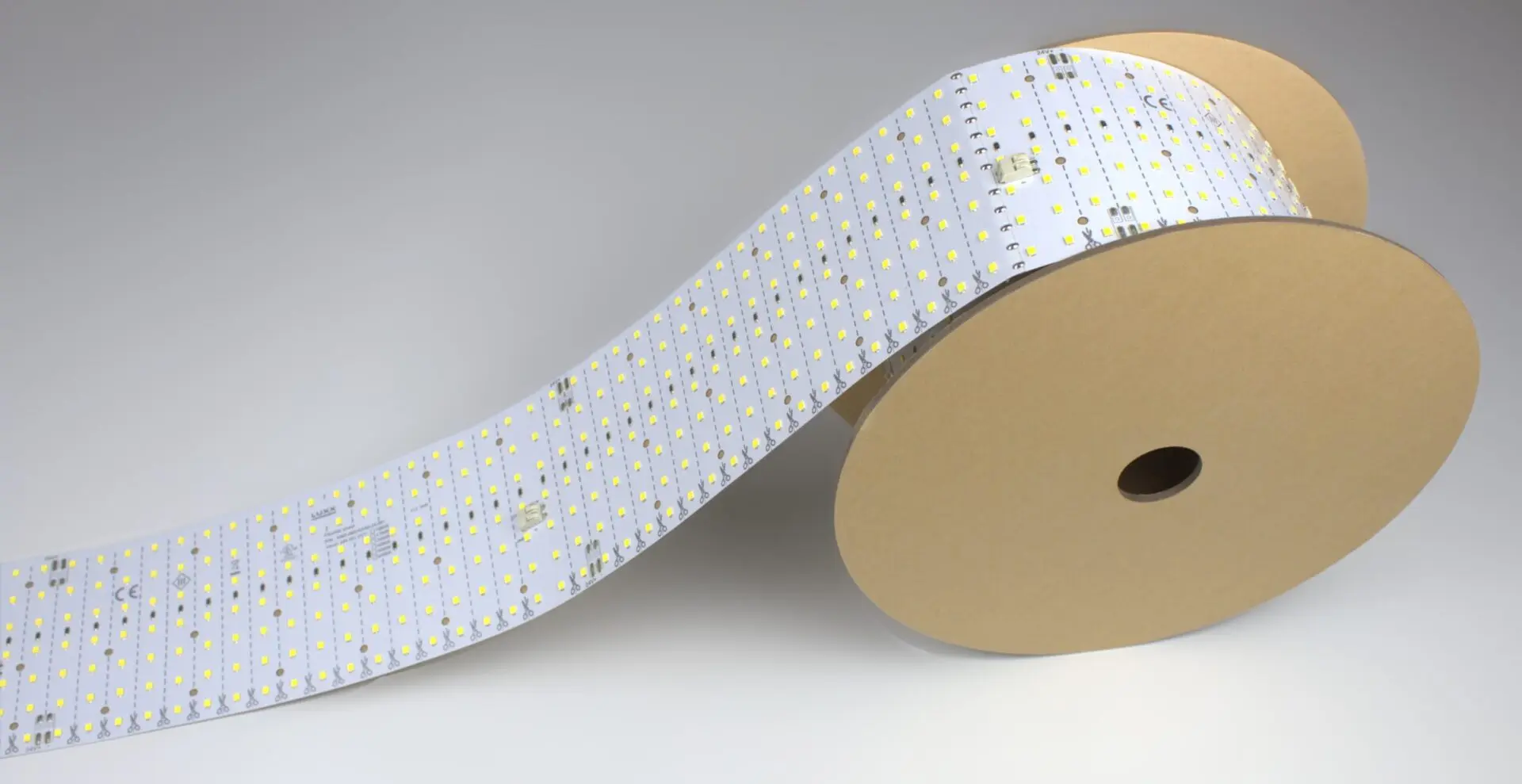
Rollable LED sheets suit this environment specifically because installation speed and transport are designed into the format. LightWave® Roll It! ships in continuous lengths up to 40 feet on a spool.
What makes trade show lighting different?
Install time is the binding constraint
Show floors run on a fixed schedule. Whatever is not finished when the hall opens is visible to every visitor for the duration. Anything that reduces on-site labour — fewer connections, fewer drivers, fewer components to align — directly buys schedule at the moment schedule is least available.
Everything must travel
Booth structures ship in crates and cases between shows. Rigid panels are awkward to pack, vulnerable to damage in transit, and consume volume that costs money on every freight movement. A sheet that rolls onto a spool packs into a fraction of the space and absorbs handling better.
Repeated install and strike
A booth built for a season is assembled and dismantled many times. Every connector is a component that will be mated and unmated repeatedly, and connector count is therefore a direct predictor of how the booth will perform in its third or fourth outing rather than its first.
Large backdrops, shallow structures
Booth walls are built from lightweight framing and tensioned fabric or panel graphics. There is very little depth behind a backdrop face, and a linear source at that depth will stripe across a surface that visitors are standing directly in front of.
Why does a rollable LED sheet suit trade show builds?
Continuous runs up to 40 feet
A full-width backdrop can be lit as a single section. That is one driver rather than several, one set of connections rather than a chain, and no joins to align while the crew is working against the clock. It also means fewer components to lose between shows.
Even output at shallow depth
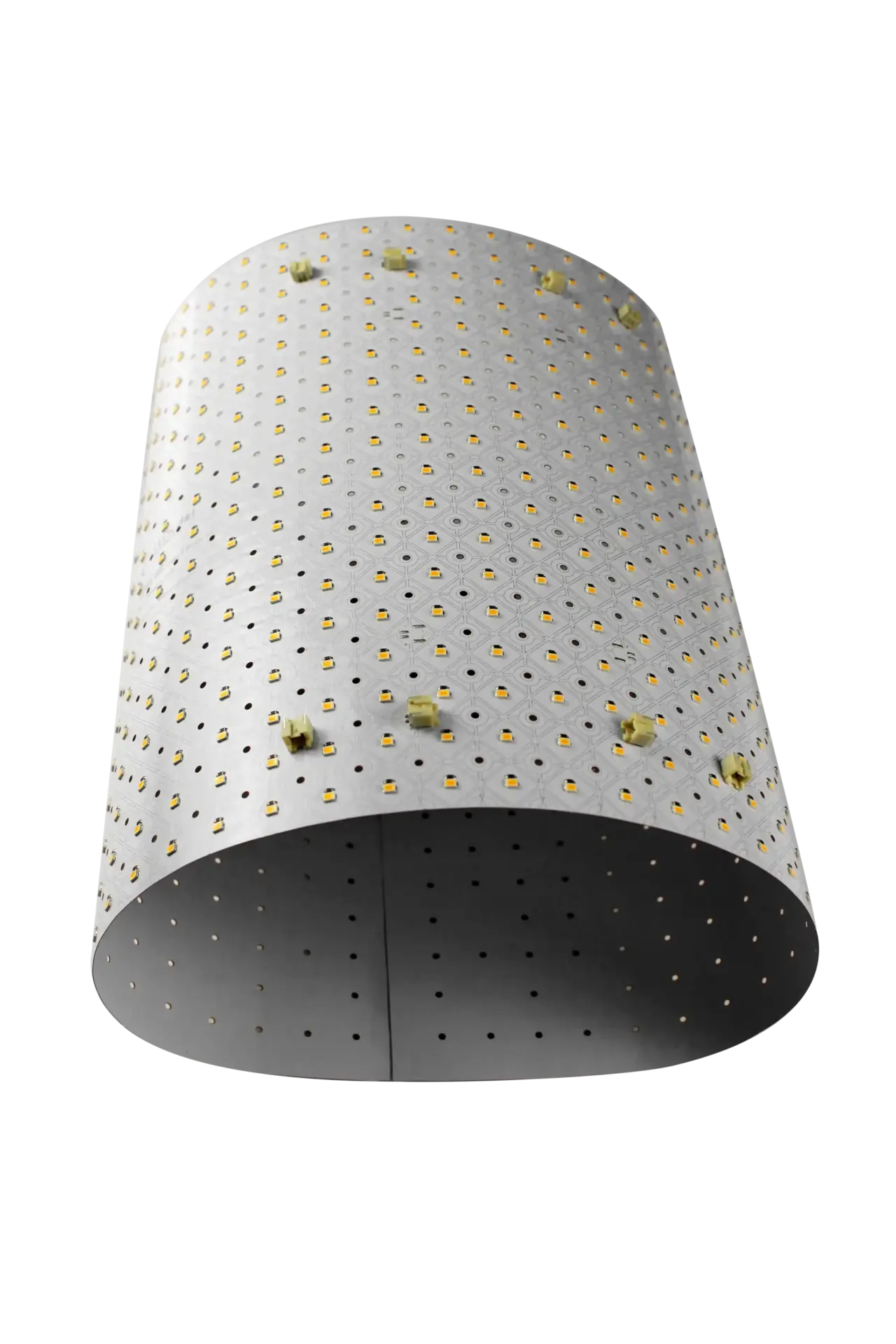
Roll It! carries 324 LEDs per square foot at under 7mm. High density means the small gap available inside a booth wall is sufficient for the output to read as an even field rather than a striped one — relevant because trade show visitors view backdrops from a metre away, not across a room.
Fast, low-component installation
Adhesive backing, cuttable to the panel, one powered run per section. LUXX supplies a screw spacer set that fixes the offset from the face material by component rather than by installer judgment, which matters more on a booth than almost anywhere else — the crew installing it in Chicago may not be the crew that installed it in Las Vegas.
Combining with cut sheets
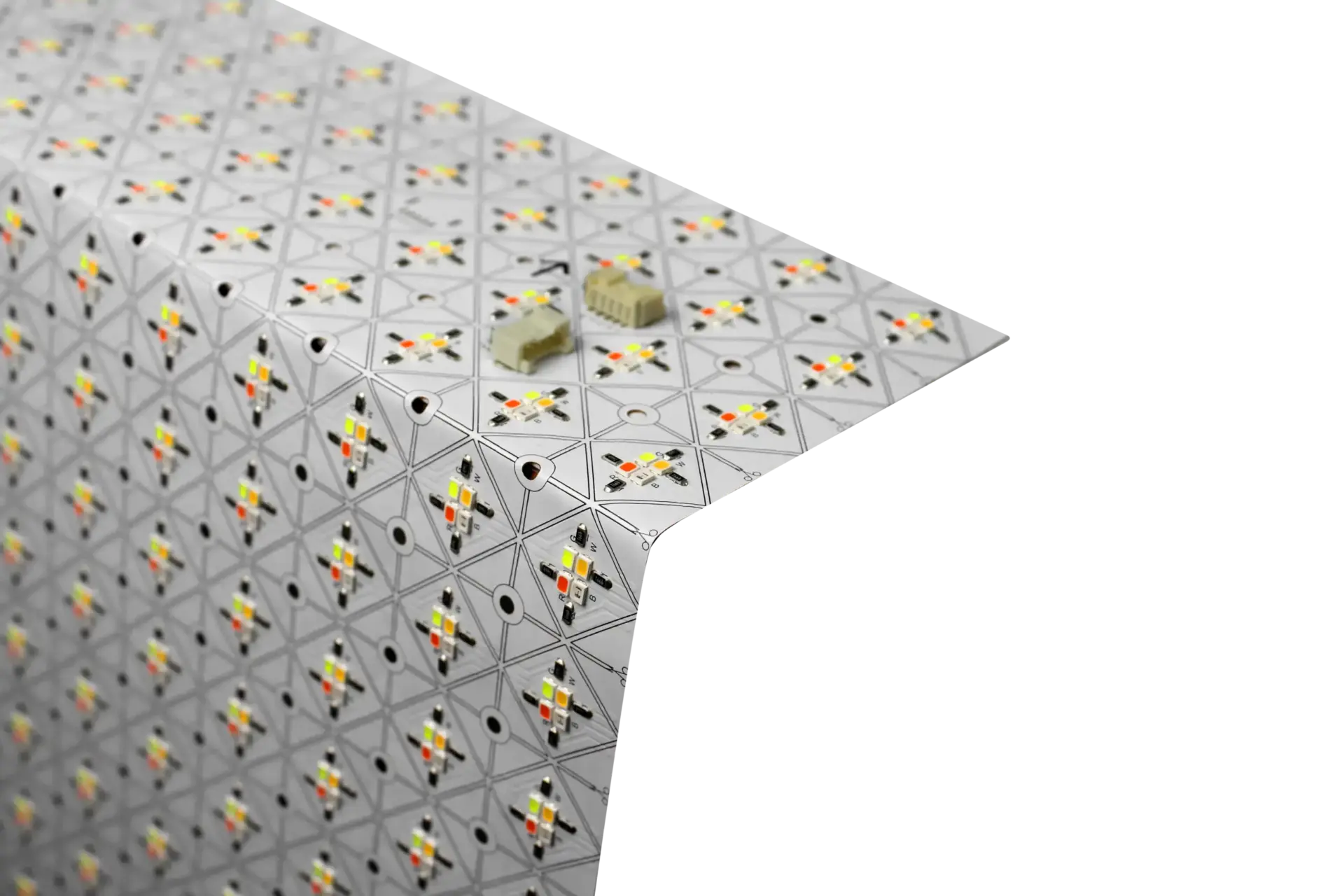
Roll It! combines with the cuttable LightWave products, so a long backdrop run can be Roll It! while header panels, counters, and shaped brand elements use cut Generation 1 Plus. Match color temperature across products so the booth reads as one build. Roll It! belongs to LUXX’s wider flexible LED light sheets range, which is why it also combines cleanly with the cut products for header panels.
How do you specify trade show booth lighting?
Color temperature and brand consistency
Exhibition halls are typically lit at high levels with cool ambient light, so a warm backdrop can read as dull rather than inviting. 5000K generally holds up against hall lighting; 3500K suits a softer hospitality-style booth. Whatever is chosen, order the full booth quantity from one production batch — a backdrop assembled from mismatched sheets is obvious under the scrutiny a booth receives.
Power planning for temporary supply
Show power is ordered in advance from the venue and is expensive to change on site. Roll It! draws 2.15W per foot (6.6W per square foot) in its higher-efficacy configuration and 3.5W per foot (10.7W per square foot) across the wider color range. Calculate the connected load before the power order is placed, and include headroom — discovering the booth needs a larger service on move-in day is a costly correction.
CRI
Ra 80+ is correct for backdrops and brand walls. Where the booth includes product display cases in which visitors examine merchandise closely, treat those separately and specify CH2 RGBW at CRI 90 for the cases while the backdrop stays at 80+.
Reuse and spares
Booths are consumable in a way permanent installations are not. Order a modest overage at the outset and keep it with the booth, because sourcing a matching sheet mid-season from a different production batch is how a visible mismatch enters an otherwise consistent build.
Which booth elements can be backlit?
- Backlit booth backdrops and rear walls
- Illuminated header and fascia panels
- Backlit fabric and tension-frame graphics
- Reception counters and demo stations
- Product display plinths and cases
- Portable and modular booth systems
- Event scenery, stage sets and pop-up activations
For a permanent fascia or monument sign rather than a travelling booth, see LED backlit signage.Booths wanting an animated backdrop rather than a static one should look at dynamic LED feature walls.
Use case example: a modular booth backdrop
A 30-foot backlit fabric backdrop on a modular booth system running a six-show season. The constraints are not the ones a permanent installation faces: the build window is hours rather than days, the structure crates and travels between shows, and the whole assembly is installed and struck repeatedly.
Connector count is the figure that predicts how a travelling booth performs in its fourth outing rather than its first, because every connector is mated and unmated at every show. A parallel strip layout multiplies connections across the backdrop; Roll It! at 5000K runs each backdrop section as a single continuous piece with one set of connections.
The spooled format also packs into existing crates without adding freight volume. Ordering a modest sheet overage from the same production batch and keeping it with the booth means a mid-season replacement matches, rather than introducing a visible band across a backdrop visitors stand directly in front of.
LightWave® products used for this application:
- Generation 1 Plus — Ambient ceilings
- Roll It! — Ceiling bands and coffers
Specify with: power supply calculator · tunable white LED sheets