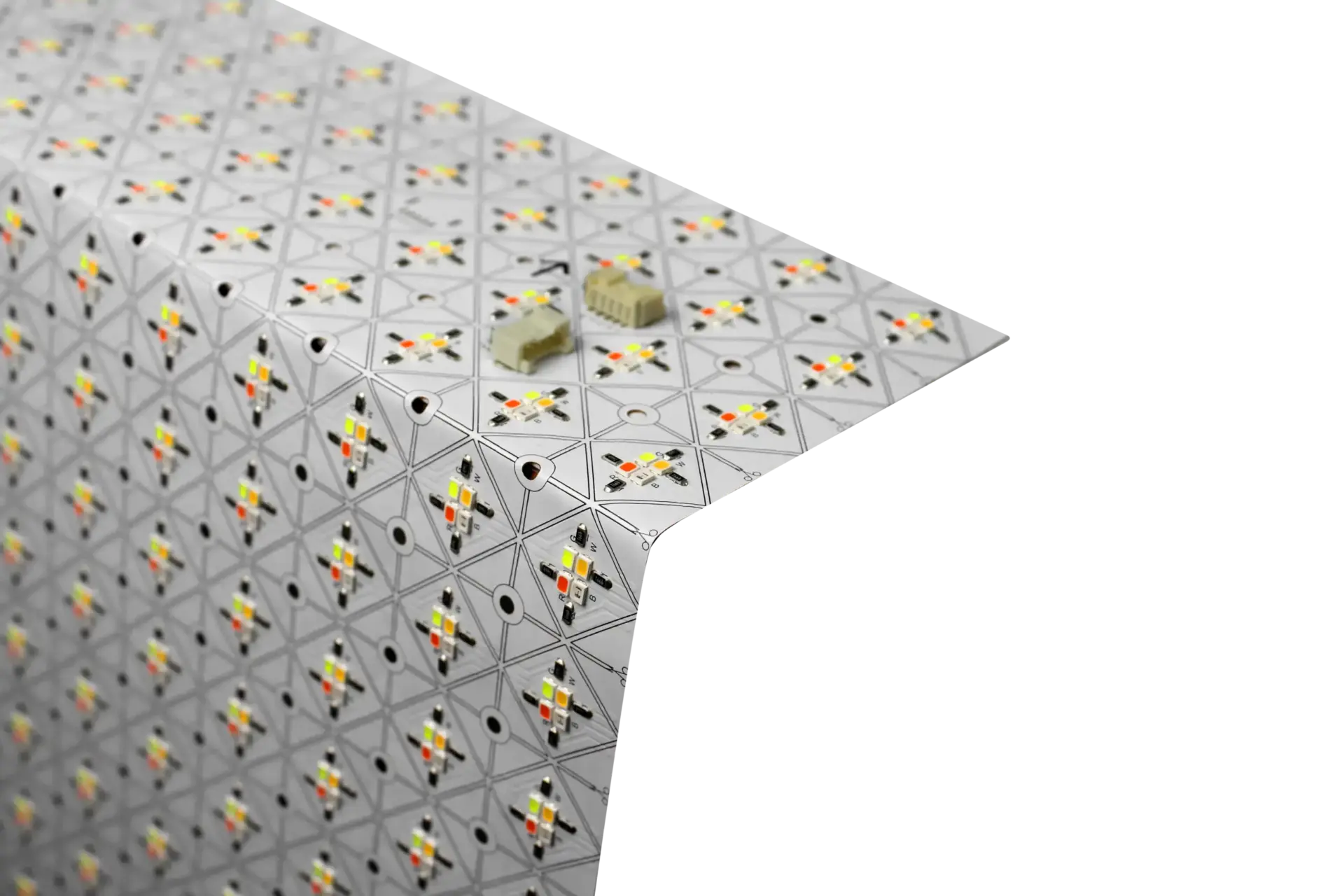
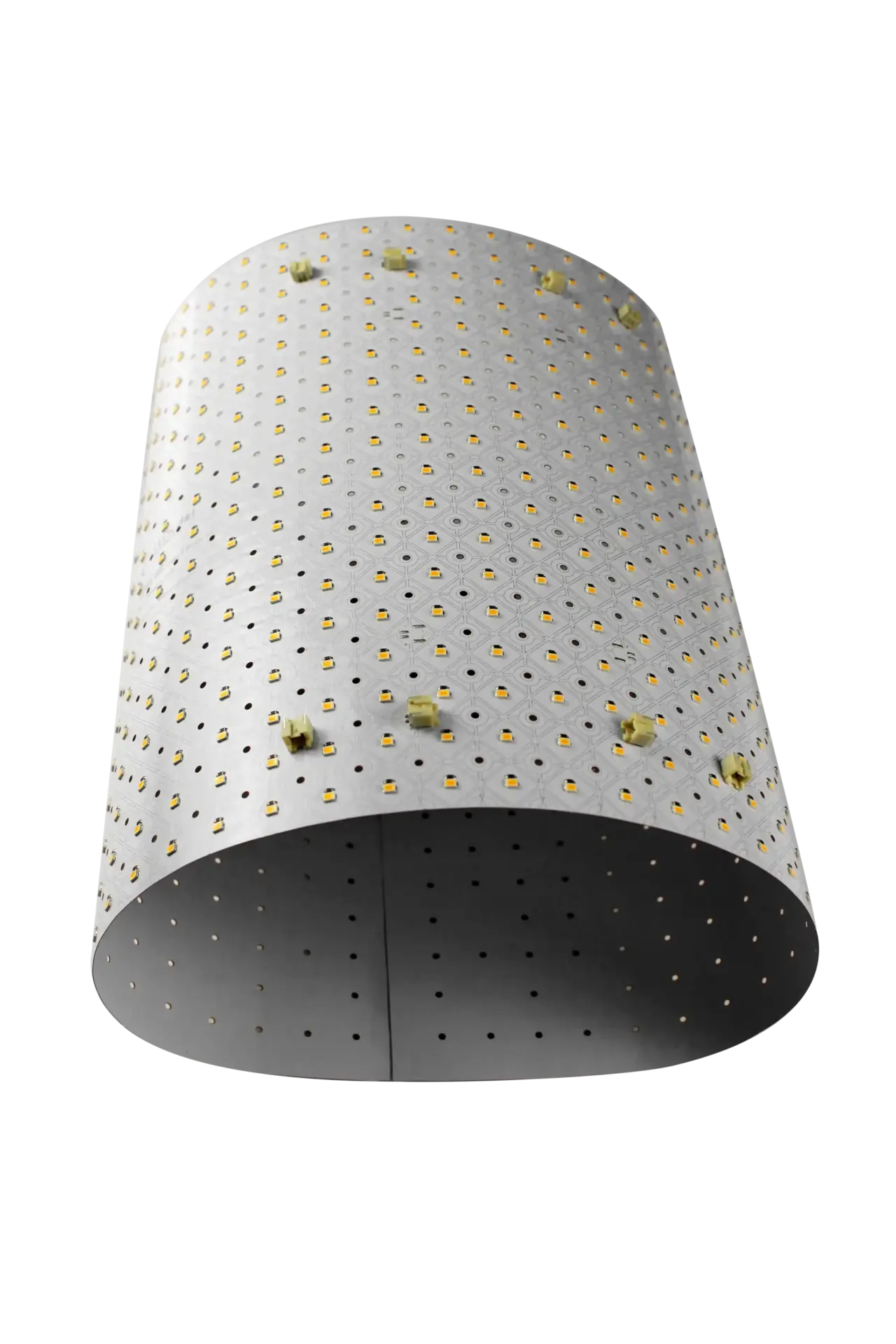
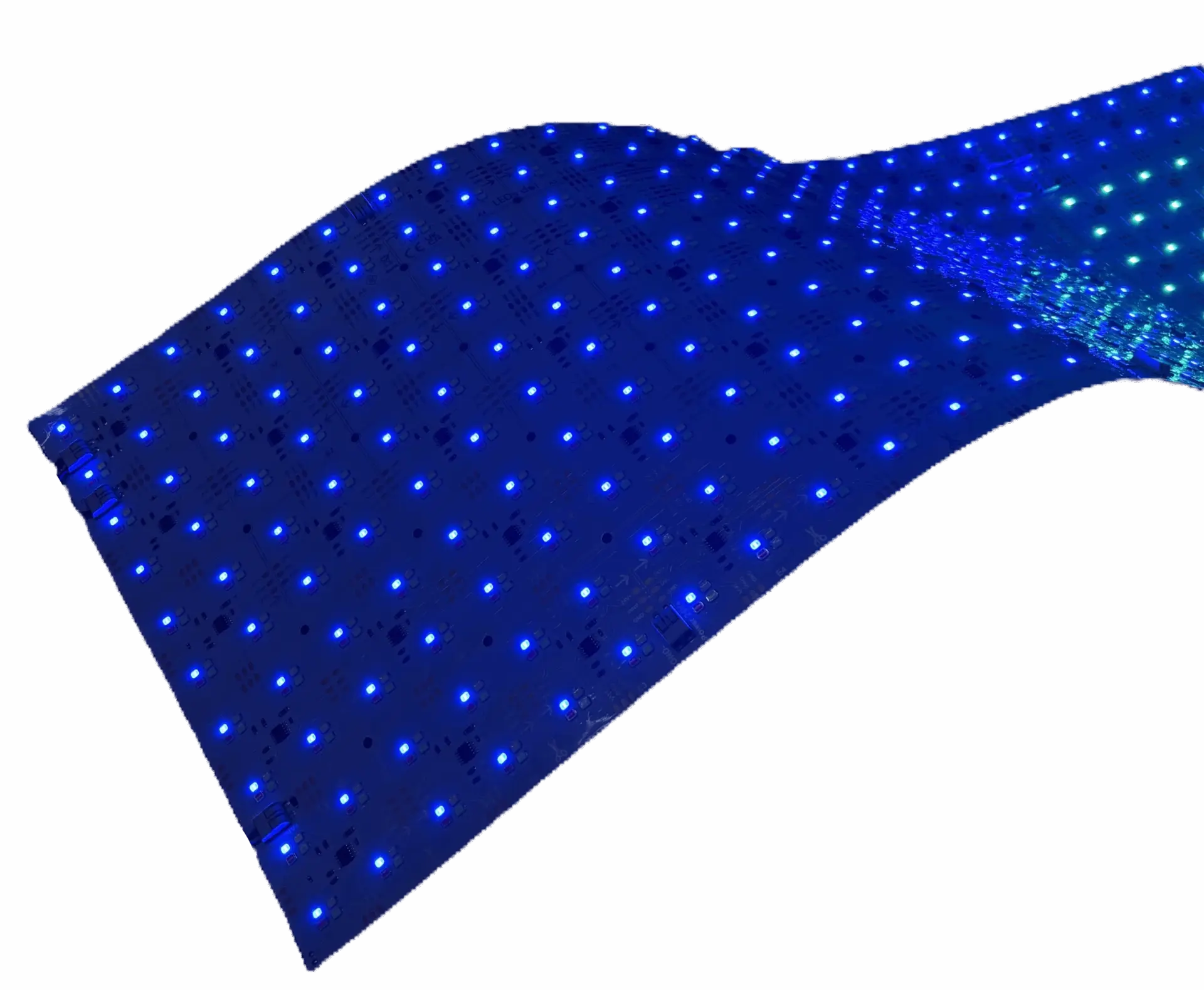
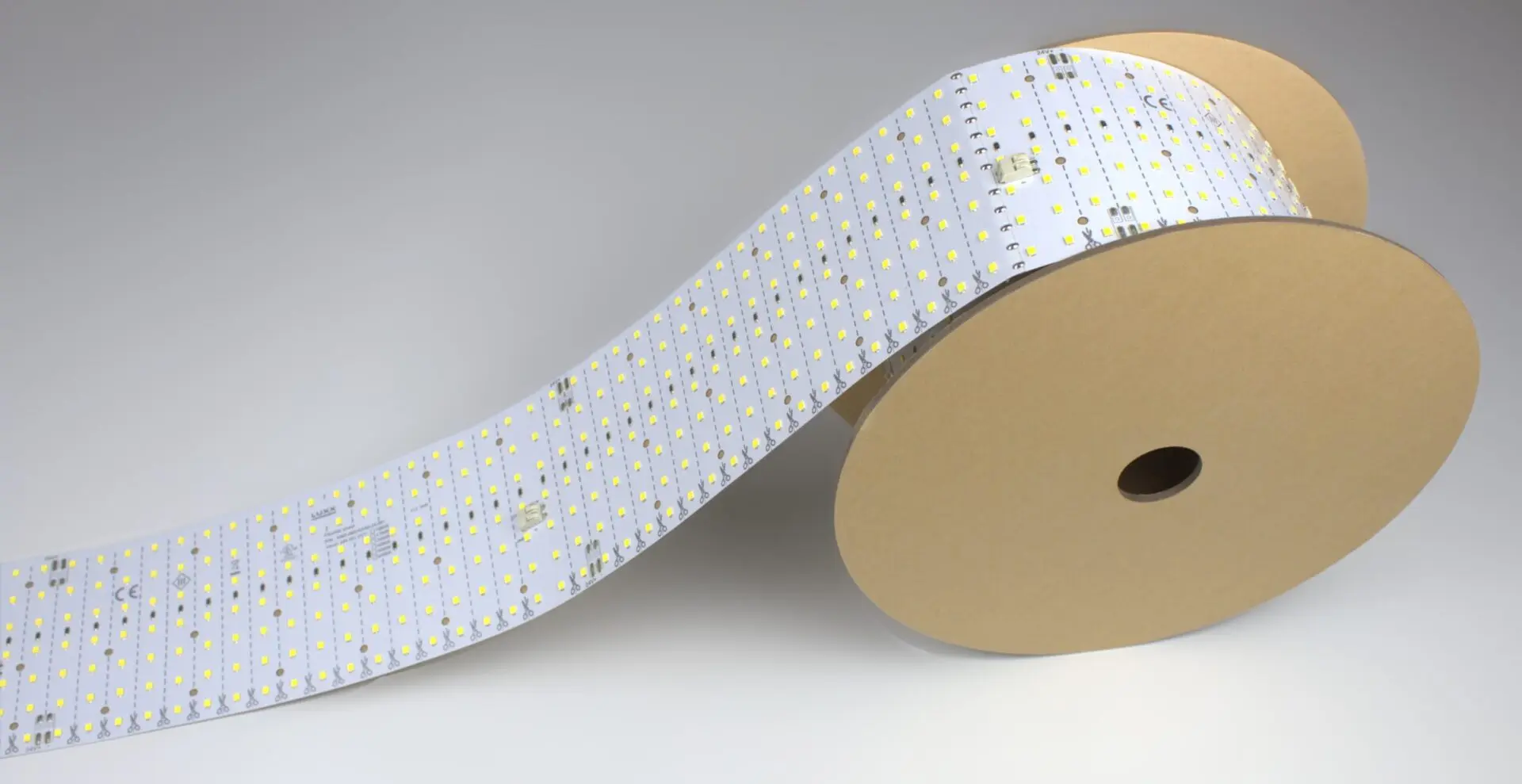
Quick Answer:LightWave® LED sheets can provide controlled, even illumination for museum displays where consistent light distribution and accurate color rendering are important. The standard LightWave® line provides CRI 80+, while the CH2 RGBW build reaches CRI 90. The under-7-mm flexible construction also helps fit shallow display cases and custom exhibit structures where conventional rigid lighting systems may be too thick.
Museum lighting operates under a constraint no commercial application shares: the object being illuminated is irreplaceable, and the light itself is a conservation risk. Every decision balances two requirements that pull against each other — the object must be seen accurately, and it must not be damaged by being seen.
That makes color rendering and thermal behaviour the governing specifications for exhibition backlighting. LightWave® CH2 RGBW reaches CRI 90, and the under-7mm sheet format fits the shallow case construction that vitrine design typically imposes.
Why is color accuracy critical in museum lighting?
In a museum vitrine, the object’s appearance is the entire purpose of the installation. A pigment rendered inaccurately is not an aesthetic shortfall; it misrepresents the object to every visitor who sees it, and to any researcher or photographer working from the display. High CRI is standard practice in exhibition lighting for this reason.
Museum lighting must balance visibility with conservation requirements. Professional museum standards specify strict limits on UV radiation and illumination levels for different artifact types. The American Alliance of Museums publishes conservation guidelines that include lighting recommendations.
Many museums reference the AAM standards and international conservation guidance that specifies maximum lux levels and UV exposure limits for paintings, textiles, and other sensitive materials.
LightWave’s tunable spectrum and low-heat output make it ideal for museum applications. Work with your museum’s conservation team to verify our products meet your institution’s published lighting standards and UV protection requirements.
“In a case, heat and UV matter as much as light quality, so a thin, cool area source gives conservators more room to work.”
— Aweyer, Lighting Applications Engineer, LUXX
The deep-red problem
CRI is an average across pastel reference samples, which means a respectable Ra figure can conceal weak performance in a specific spectral region. Deep red is the usual casualty because it is not weighted heavily in the standard average — and deep red is precisely where much historical pigment sits. Ochres, madders, vermilions, and the warm tones in timber, leather, and textile dyes all depend on it. Where an exhibition includes such material, ask about performance on the saturated red sample specifically rather than accepting the Ra figure alone.
Specifying the right CH2
CH2 RGBW is rated CRI 90 at its 5000K white channel, producing 900 lumens from four channels at 11W each. CH2 Tunable White is rated Ra 80+. Writing “CH2” alone on a submittal does not secure the higher rating — specify CH2 RGBW explicitly where color accuracy is the requirement, and confirm it on the approved submittal. The same CH2 RGBW specification is used for color-critical retail display backlighting.
How do you backlight artwork and graphics?
For transparencies, printed graphics and backlit artwork, the light must be even across the whole image and accurate in color. Use CH2 where color accuracy matters most (the RGBW build reaches CRI 90), mount the print on an opal acrylic diffuser, and keep a consistent gap with the screw spacer set. Dim to suit the gallery; backlit images often read best well below full output.
How is heat managed in a sealed display case?
Sealed cases concentrate heat
Conservation vitrines are frequently sealed or humidity-controlled, which means restricted airflow around anything inside them. A heat source in that environment raises case temperature and can drive humidity swings, and both are conservation problems independent of any light damage.
Why the spacer set matters here
The screw spacer set holds the sheet off the forward-facing material, providing thermal clearance alongside its optical function. In a sealed case that clearance protects the object as well as the LEDs. Mounting a sheet flat against a case panel with no air path is a detail worth catching at design stage rather than at installation.
Mounting the lighting outside the case
Where the case construction permits, backlighting the display panel from outside the sealed volume removes the heat question from the conservation environment entirely. The under-7mm sheet profile is what makes this practical, since it can sit within a case wall or backing panel rather than requiring a separate lit compartment.
How do LED sheets fit shallow display cases?
Vitrines are designed around sightlines, security, and conservation, not around lighting. Case depth is generally settled before the lighting package is specified, and it is rarely generous.
Thickness and density
CH2 sheets are under 7mm with 648 diodes per 12 by 24 inch module. High density means little blending distance is required, so the sheet delivers an even field in a case depth that would show striping from a linear source. Sheets cut along designated lines to follow the case panel rather than requiring the panel to accommodate a fixed module. How do LED sheets fit shallow display cases?”: CH2 is part of LUXX’s flexible LED light sheets range, chosen here specifically for its CRI 90 configuration.
Dimming is essential, not optional
Conservation lighting levels are set by the sensitivity of the material on display, and they are frequently very low — far below what a source produces at full output. Specify a compatible dimming driver and confirm the protocol with the controls contractor, because a case that can only run at full brightness is unusable for sensitive material regardless of its other qualities.
Consistency across a gallery
A gallery is a sequence of cases a visitor moves between, comparing as they go. Cases that differ in tone read as a quality failure even when each is individually acceptable. Order the full gallery quantity as a single production batch; LUXX bins its LEDs within a 3-step MacAdam standard, which constrains diode-to-diode deviation and is what makes a consistent sequence achievable.
Which exhibition applications suit LED sheets?
- Sealed and humidity-controlled display vitrines
- Backlit interpretive and graphic panels
- Illuminated artefact and specimen cases
- Translucent and transilluminated objects
- Gallery wayfinding and label lighting
- Temporary and touring exhibition casework
- Visible-storage and study-collection displays
Illuminated specimen plinths in stone follow the same principles as backlit onyx and stone countertops.
Use case example: a sealed textile vitrine
A sequence of sealed cases displaying dyed historical textile, conservation levels set low, case depth fixed at under 40mm by existing joinery. Two requirements govern: the dyes must render accurately, and the sealed volume must not gain a heat source.
Color accuracy drives the product choice because the dyes include madder and other warm reds, and an averaged CRI figure can conceal weak deep-red performance. CH2 RGBW at CRI 90, running its 5000K white channel, cut to follow each case panel, addresses the rendering requirement within the depth available.
The screw spacer set provides thermal clearance behind each sheet inside the sealed volume, which protects the object as well as the LEDs. Dimming drivers are specified from the outset rather than added later, since the conservation level sits well below full output. Supplying the whole gallery from one production batch keeps the case sequence consistent as visitors move along it.