Quick Answer:
Use an LED light sheet when the surface must glow evenly and the cavity is shallow; use an LED strip when you need a line of light or have plenty of depth. A strip is a line source, so behind thin stone, fabric or acrylic it shows as stripes unless it sits far enough back to blend. A LightWave® sheet spreads 324 LEDs across every square foot at under 7 mm thick, so it blends at a much shorter distance.
LED strip and LED light sheet are frequently treated as interchangeable, and they are not. They solve different geometric problems. A strip produces a line of light. A sheet produces a field of light. Choosing between them is not a budget decision or a quality decision — it is a decision about the shape of the thing you need to illuminate.
Getting it wrong is expensive in a specific and predictable way: a strip forced to do a sheet’s job produces visible striping, hotspots, and dark bands, and the usual remedy is to add cavity depth and diffusion until the assembly no longer fits the space it was designed for. The assembly no longer fits the space it was designed for. Browse the full flexible LED light sheet range to see which format suits your project.
What is the difference between an LED light sheet and an LED strip?
An LED strip is a narrow flexible circuit carrying diodes in one or two rows along its length. Its output is inherently linear. To cover a surface with a strip, you run multiple parallel strips and rely on distance and diffusion to blend the gaps between them into something that reads as even.
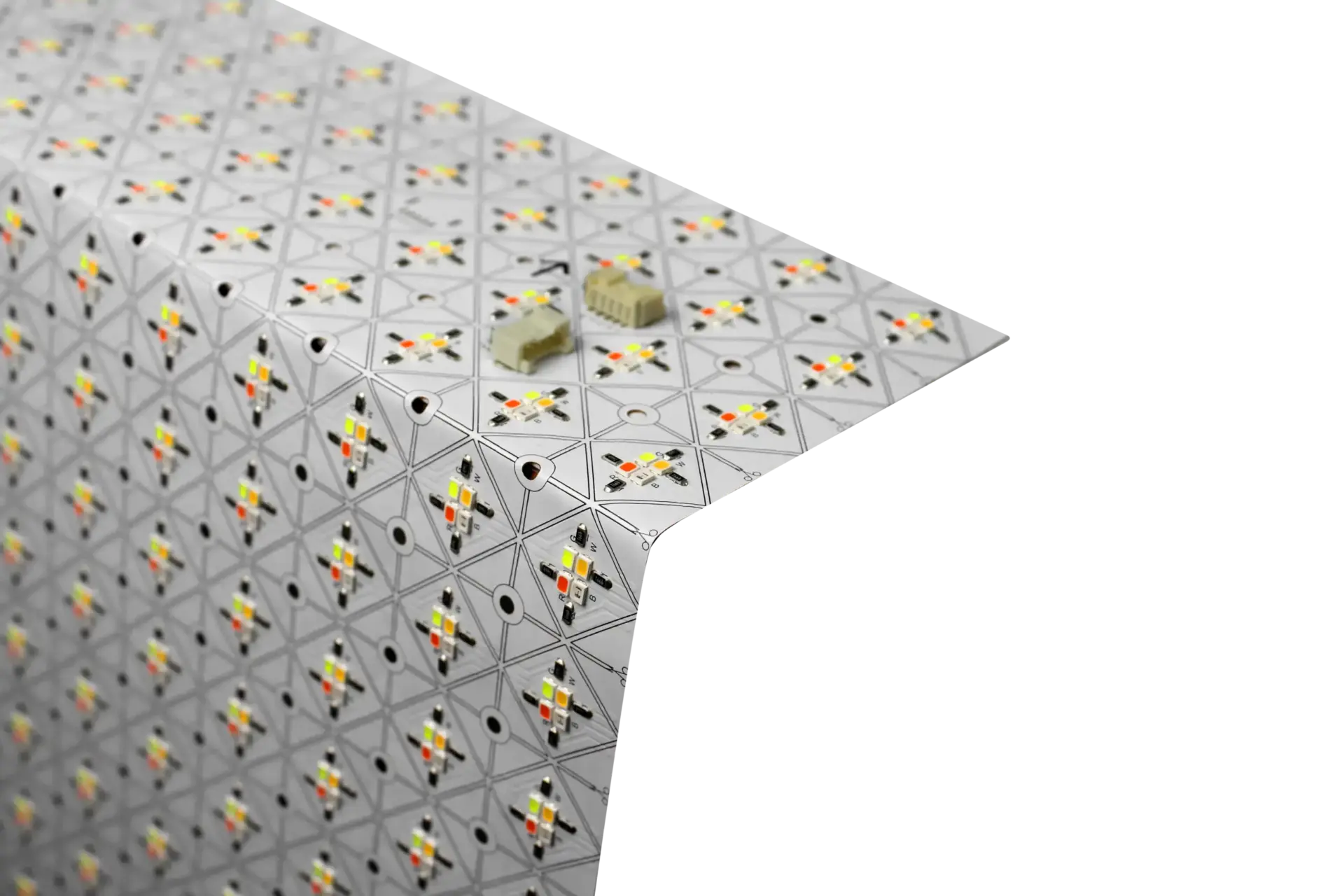
A light sheet distributes diodes across a two-dimensional area at high density. LightWave Roll It! carries 324 LEDs per square foot; Generation 1 Plus packs 648 diodes into a 12 by 24 inch sheet. There are no gaps to blend, because the emitting surface is already continuous at the scale the eye resolves.
This produces the practical difference that matters most: the cavity depth each requires. A strip array needs enough distance behind the face material for the linear sources to merge. A sheet needs only enough to soften individual diodes, which at LightWave’s density and under-7mm profile is a much smaller number.
When should you use an LED strip?
Strips are not a compromise product. In the applications they suit, they are simply correct and usually cheaper.
Linear and edge conditions
Under-cabinet lighting, shelf edges, handrails, stair nosings, toe-kicks, and reveal details are all genuinely linear. The design intent is a line of light, and a sheet would be materially wasted.
Grazing and wall-washing
When the effect comes from light traveling across a surface at a shallow angle to reveal texture, a linear source at the edge is the correct tool. The wall is lit by the light, not backlit through it.
Deep cavities
When there is generous depth behind the face material — say a lightbox with substantial internal volume — a strip array has room to blend and the depth advantage of a sheet stops mattering. In that condition, cost usually decides.
Narrow channels
Aluminum profile work, extrusions, and narrow reveals are dimensioned for strip. LUXX makes both, including aluminum profiles and spotless flexible linear products for exactly these conditions.
When should you use an LED light sheet?
Backlighting any surface
Signage faces, translucent stone and onyx, resin and acrylic panels, printed fabric graphics, and lightbox faces all require even illumination across a full area. Gen 1 Plus about what makes a flexible LED sheet suited to this job. This is the sheet’s defining application. LightWave sheets are built for it: cuttable, bendable, adhesive-backed, and thin enough to sit behind a face material without dictating the cabinet depth.
Shallow cavities
This is the decisive case. When the available depth behind the face material is limited — shallow retail casework, museum vitrines, slim signage cabinets, and most retrofits — a strip array cannot blend in the distance available and will print stripes. A sheet at high density can. If the cavity is shallow and the surface must read even, the specification is a sheet, and the alternative is not a cheaper strip solution but a rebuilt cabinet.
Curves, columns, and irregular shapes
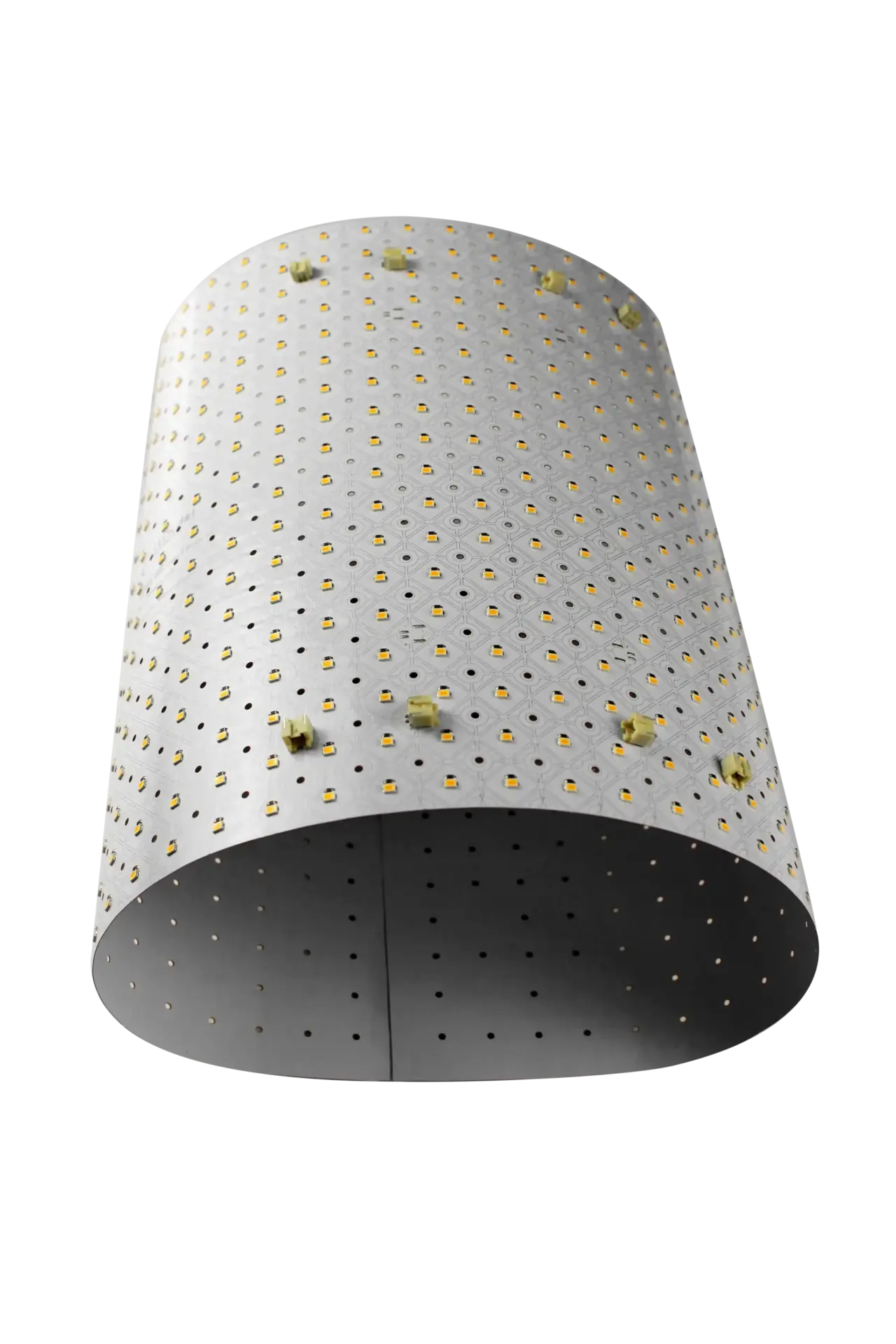
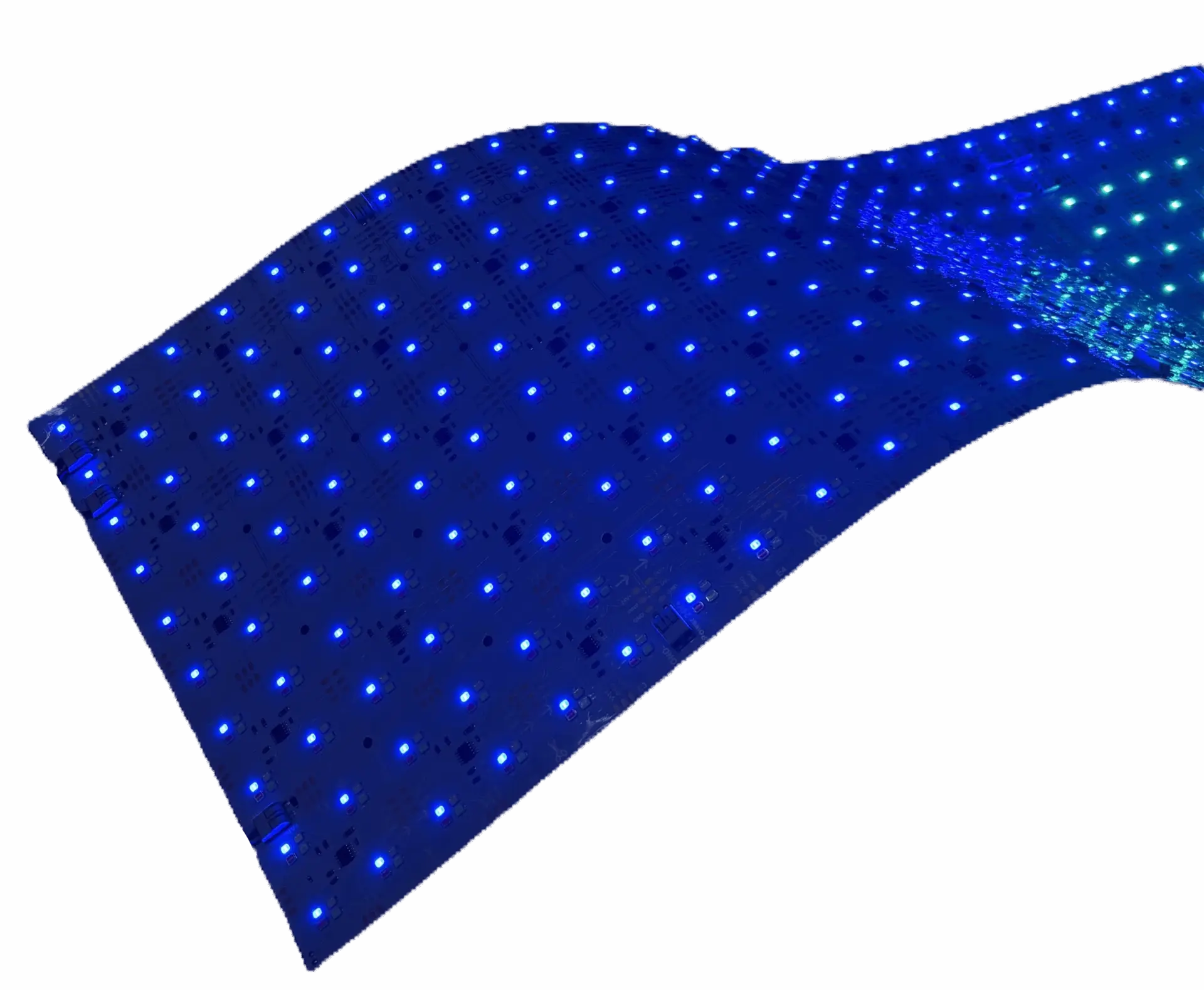
Strips bend along their length but not across their width, so wrapping a column with strips produces a series of lines rather than a lit surface.A sheet under 7mm — like LightWave Generation 1 Plus — wraps pillars, curved millwork, and tight radii while remaining even., and cuts to fit shapes the enclosure did not anticipate.
Long uninterrupted runs
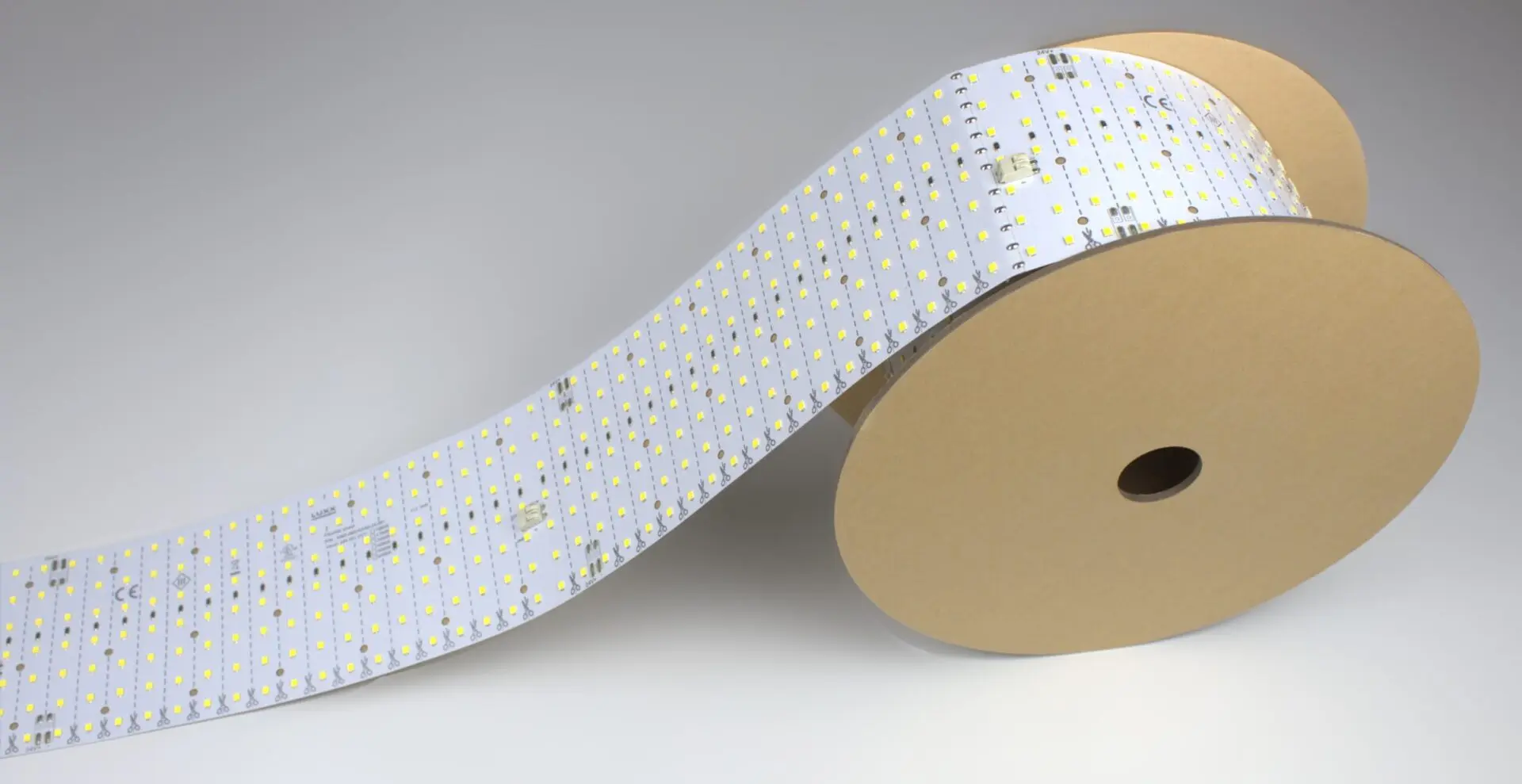
Roll It! reaches 40 feet as a single continuous piece. Covering the same area with strips means a parallel array, and every added run multiplies the connector and driver count.
What causes hotspots and uneven backlighting?
Hotspotting is what happens when individual sources are visible through the face material rather than merged into a field. It comes from three causes: sources spaced too far apart, insufficient distance between source and face, and face material with too little diffusion.
If you’re looking for a line-source alternative instead of an area source,
flexible LED strips are available, though they
require more spacing to achieve even illumination and read as individual LEDs at short
viewing distances.
A strip array is vulnerable on the first two counts by construction. Its sources are concentrated in lines with gaps between them, and closing those gaps optically requires distance the assembly may not have. The typical field remedy is to add strip runs, which increases connected load, driver count, and labor, or to add depth, which requires changing the millwork.
A sheet addresses the problem at the source. High diode density means there is very little to blend. LUXX supplies a screw spacer set that holds the sheet at a fixed offset from the forward material, which both establishes the blending gap and provides thermal clearance. LUXX also bins its LEDs within a 3-step MacAdam standard, which keeps tone and brightness consistent from one sheet to the next — relevant on large surfaces, where diode-to-diode variation between production batches shows up as visible patchiness across the field.
Are LED light sheets more expensive than strips?
Per linear foot, strip is cheaper than sheet. That comparison is misleading whenever the job is to cover an area, because the honest comparison is installed cost per illuminated square foot, and that includes several things the material price omits.
What the material price leaves out
Covering an area with strips means multiple parallel runs, each requiring its own connections and its own share of driver capacity. Every splice is a labor line item and a potential failure point. Additional cavity depth means millwork changes. Diffuser material to hide striping is a further cost, and it also absorbs light, which means more strip to hit the target brightness.
Where the sheet’s advantage compounds
A sheet arrives as an area product and installs as one. Cut to fit, peel, position, press. Roll It! powers one long section instead of a chain of small ones, cutting driver count, splices, and wiring clutter in a single move. On large-format work this is usually the dominant cost factor, not the price per foot of the emitting material.
The honest summary
For linear work, strip is cheaper both to buy and to install. For area work, sheet is more expensive per foot and frequently cheaper installed. The break-even depends on cavity depth and total area, and it moves toward the sheet as depth decreases.
Lighting a big surface? See how sheets handle runs up to 40 ft on the large-format LED light sheet page.
A worked comparison: backlighting a sign face
A 4 foot by 8 foot translucent sign face in a cabinet with roughly two inches of internal depth is the condition where the sheet-versus-strip choice becomes concrete. Both approaches are walked through below, because the numbers make the geometry argument clearer than the principle does.
The strip approach
Thirty-two square feet cannot be covered by a single strip run. The installer lays parallel runs across the face, and the spacing between them is dictated by the two inches of available depth: the closer the strips sit to the face, the more runs are needed to prevent visible striping. Each run needs a connection at one or both ends, the runs must be tied back to drivers, and the aggregate connector count climbs quickly. Diffuser material is effectively mandatory, and because diffusion absorbs light, the target output has to be raised to compensate — which means either more runs or brighter strip.
None of this is impossible. It is routinely done. But the labor is in the wiring, and the visual result depends on whether the installer got the spacing right for the depth available.
The sheet approach
The same face is covered with cut sheets or, if the geometry suits it, Roll It! runs. The emitting surface is already continuous, so the two inches of depth is sufficient rather than marginal. The screw spacer set fixes the offset from the face material, which means the blending gap is set by a component rather than by installer judgment. Fewer connections, fewer drivers, less to go wrong at commissioning.
Where the comparison lands
The sheet material costs more. The installed assembly frequently costs less, and the visual outcome is less dependent on field technique. As available depth increases, this advantage narrows — which is precisely why depth is the second question in the decision sequence below.
Common mistakes
Three errors account for most of the disappointing outcomes in this category.
Specifying strip because of the per-foot price
The per-foot comparison is only meaningful when both products are doing linear work. Once the job is area coverage, comparing a linear price to an area price produces a number that has no relationship to installed cost.
Designing the cavity before choosing the source
When the millwork is drawn first and the lighting is selected afterward, the available depth becomes a fixed constraint that the light source has to accommodate. Shallow cavities and strip arrays are a poor combination, and by the time this is discovered the cabinet is often already fabricated. Choosing the source type early costs nothing and removes the constraint.
Assuming diffusion will solve striping
Diffuser material spreads light, but it cannot manufacture light where none is emitted. Heavy diffusion over widely spaced sources reduces the contrast between lit and unlit bands without eliminating them, and it absorbs a meaningful share of the output in the process. Diffusion refines an already-even field. It does not rescue an uneven one.
How do you choose between a sheet and a strip?
Answer three questions in order and the decision usually resolves without further analysis.
- Is the thing you are lighting a line or an area? Line means strip. Area means sheet.
- How much depth is available behind the face material? Shallow means sheet, regardless of the first answer.
- Is the surface flat, or does it curve in more than one direction? Compound curvature means sheet.
If a surface must be evenly lit and the cavity is tight, the answer is a sheet. If the design intent is a visible line of light or a graze across a surface, the answer is a strip. LUXX manufactures both, so the recommendation is not a product preference — it is a question of which geometry you are solving for. Once you’ve settled on a sheet, the LED light sheet buying guide walks through CRI, CCT, power, and mounting in detail.