The terms specifiers, contractors, and designers encounter when specifying LED backlighting — defined in plain language, with LightWave®-specific context where it matters, and links to LUXX resources that go deeper on each concept.
How to Use This Glossary
Terms are grouped into five categories: light and color, control and driver, physical form factor and installation, compliance and standards, and LightWave-specific product terms. Within each section, terms are alphabetical.
Every linked entry points to a relevant LUXX resource. Use this glossary as your quick reference for LED light sheet specification.
Light & Color Terms
CCT (Correlated Color Temperature)
The color appearance of white light, measured in Kelvin. Lower numbers mean warmer amber or orange light, while higher numbers mean cooler blue or daylight light.
Common CCTs in commercial LED lighting include 2700K warm, 3500K neutral warm, 5000K daylight, and 6500K cool daylight. LightWave® variants cover a range of CCTs depending on the SKU. See Tunable White LED lighting for CCT-adjustable applications.
CRI (Color Rendering Index)
CRI describes how faithfully a light source renders the true colors of objects it illuminates. The scale runs from 0 to 100 against a reference illuminant.
Ra 80+ is a common commercial standard. CRI 90+ is often specified for retail, hospitality, museum, and other applications where merchandise, food, artwork, or faces need accurate color.
LightWave® CH2 RGBW is rated CRI 90 on its 5000K white channel. See High-CRI LED Light Sheets Explained for more on CRI specification.
Kelvin (K)
Kelvin is the unit used to measure CCT. It is named after physicist Lord Kelvin.
The practical range for architectural lighting is roughly 1800K, which produces a warm amber appearance similar to candlelight, through 6500K, which produces a cool daylight appearance. Around 3500K is a common warm-white commercial choice.
Lumens (lm)
Lumens measure the total visible light output of a source.
LightWave® Generation 1 Plus Tunable White produces 1,580 lumens at 2700K and 1,720 lumens at 6500K. Higher lumen output means more visible light, but it does not by itself determine perceived brightness. Surface material, diffusion, distance, and light distribution also affect the result.
Lumens per Watt (lm/W)
Lumens per watt is an efficiency measurement showing how much visible light a source produces for each watt of input power.
Higher lm/W generally means greater efficiency. LightWave® Generation 1 Plus is rated at 113–123 lm/W, while Roll It! Standard reaches 130 lm/W. CH2 is rated above 90 lm/W.
Ra (Ra 80+, Ra 90+)
Ra is commonly used as a simplified notation for the general CRI rating.
Ra 80+ means CRI is at least 80, while Ra 90+ means CRI is at least 90. The general Ra value is based on the average rendering of standard reference colors. Other metrics and individual color samples can reveal additional information about how a source performs with specific saturated colors.
RGBW
RGBW means Red + Green + Blue + White.
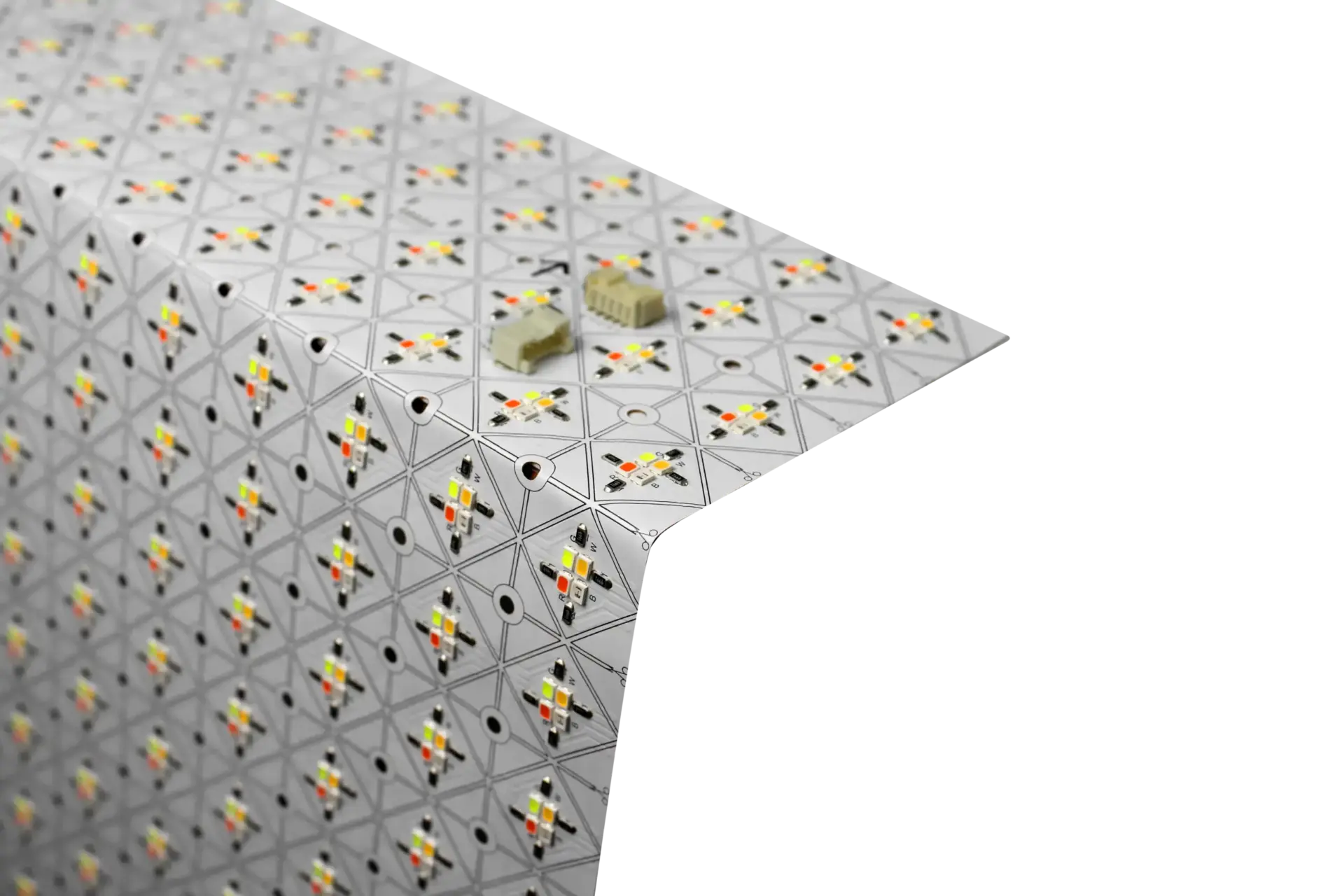
An RGBW light sheet combines red, green, and blue LED channels with a dedicated white LED channel. The dedicated white channel produces a more natural white output than mixing RGB channels alone.
LightWave® offers RGBW configurations for both Generation 1 Plus and CH2, while PIXX adds individually addressable RGBW control. See RGBW LED strip and lighting technology for additional RGBW context.
Tunable White
Tunable White describes a light source that adjusts its white color temperature across a defined Kelvin range.
LightWave® Tunable White configurations can adjust from 2700K to 6500K through compatible control equipment, allowing warm and cool LED channels to be mixed to produce different CCT settings.
Control, Driver & Dimming Terms
0–10 V
0–10 V is an analog lighting-control protocol commonly used in commercial and workplace installations.
A dimmer sends a low-voltage DC control signal to a compatible driver, which adjusts LED output according to the control level. The LED driver must specifically support 0–10 V input.
Camera-Safe PWM (Flicker-Free)
Camera-safe PWM refers to LED drivers using sufficiently high-frequency pulse-width modulation to reduce visible flicker and moving bands when lighting is recorded by cameras.
This matters for retail, hospitality, stage, event, and social-media-facing installations. Always confirm the driver’s actual PWM performance when a project will be filmed.
Constant Voltage LED
Constant-voltage LED products operate from a fixed DC voltage, commonly 12V or 24V. The connected LED load draws the current required for its operating condition.
LightWave® sheets are constant-voltage loads. Driver sizing should account for the total connected wattage and appropriate operating headroom.
For project-specific power planning, use the LightWave LED Light Sheet Buying Guide.
DALI (DT6, DT8)
DALI stands for Digital Addressable Lighting Interface.
DALI DT6 is generally used for single-channel control such as brightness. DALI DT8 supports color-control applications, including tunable white and other multi-channel configurations.
A compatible DALI driver and the correct device type must be selected for the LightWave® configuration being controlled.
DMX / RDM
DMX, or Digital Multiplex, is a digital lighting-control protocol widely used in entertainment, architectural, stage, and event applications.
RDM, or Remote Device Management, adds two-way communication for device addressing and status information.
With RGBW lighting controlled through an appropriate DMX decoder, four control channels are typically required for the four LED channels.
Driver Headroom
Driver headroom is the difference between a driver’s maximum rated output and the actual connected load.
Allowing headroom reduces the likelihood of operating a driver continuously at its maximum capacity. The appropriate margin depends on the project, ambient temperature, cable length, and electrical design.
PWM (Pulse Width Modulation)
PWM is a common method used by LED drivers to control brightness.
The driver rapidly switches the LEDs on and off and changes the duty cycle to control the average light output. The eye generally perceives this as continuous dimming.
Lower-frequency PWM can become visible to cameras even when the flicker is not obvious to the human eye. For filmed installations, specify drivers with appropriate camera-safe performance.
SPI (Serial Peripheral Interface)
SPI is a digital communication protocol commonly used for individually addressable LED pixels.
The controller sends color information through the data chain, allowing individual pixels to respond to their assigned data. LightWave® PIXX uses SPI control and provides individual pixel control across its RGBW LED array.
See LightWave PIXX — Addressable RGBW LED Sheet for the PIXX specifications.
TRIAC / ELV
TRIAC and ELV refer to common dimmer technologies.
TRIAC, or leading-edge dimming, originated with incandescent lighting. ELV, or trailing-edge dimming, is commonly associated with electronic low-voltage systems.
An LED driver must specifically support the dimming method being used. Never assume that a conventional wall dimmer will work with an LED load without confirming driver compatibility.
Physical Form Factor & Installation Terms
Adhesive-Backed (Peel-and-Stick)
An adhesive-backed LED sheet has a factory-applied adhesive layer on its mounting side.
The installer removes the release liner and presses the sheet onto the prepared mounting surface. LightWave® sheets use adhesive backing for straightforward installation across many applications.
Bendable / Flexible Substrate
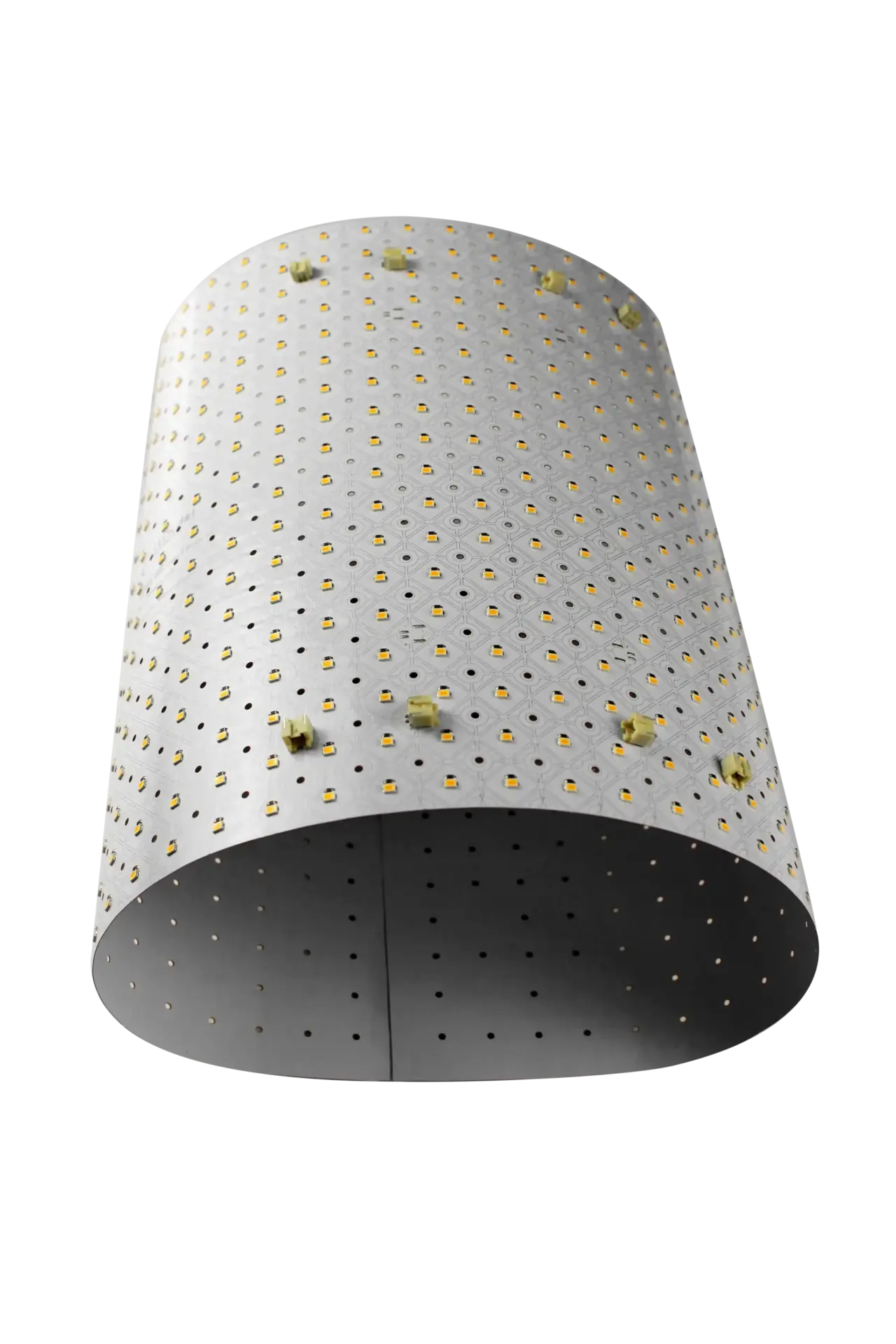
A flexible substrate allows the LED sheet to bend around curves, columns, radiused surfaces, and other non-flat geometries.
LightWave® sheets are designed around this flexibility. Combined with their thin profile, the format is useful for applications where rigid LED panels cannot follow the required shape.
Cavity Depth
Cavity depth is the total available space between the mounting surface and the visible forward-facing material.
For an LED sheet installation, the available depth can include the sheet thickness, any spacer clearance, the diffuser or face material, and potentially the driver if it is located within the cavity.
Cuttable (Along Marked Lines)
A cuttable LED sheet can be trimmed to fit the required installation dimensions.
LightWave® sheets must be cut only along their designated cut lines. Cutting outside those locations can damage electrical traces and disable part of the sheet.
See LightWave LED Light Sheets for the current LightWave range and its flexible, cuttable format.
Diffuser
A diffuser is the forward-facing material positioned in front of the LED source to spread light and conceal individual LED points.
Common diffuser materials include frosted acrylic, opal polycarbonate, printed films, and fabric faces. The diffuser works together with the distance between the LED sheet and the face material to create an even appearance.
Hotspot
A hotspot is a visible bright area caused by individual LEDs or concentrated light sources showing through the forward-facing material.
Hotspots can often be reduced by increasing the distance between the LEDs and diffuser, improving diffusion, or using a denser light source.
Light Guide Plate (LGP)
A Light Guide Plate is a rigid transparent panel with an etched, printed, or otherwise engineered pattern that redirects light across a surface.
LGP technology is commonly used with edge-lit LED panels. LightWave® sheets use a different approach because LEDs are distributed across the sheet rather than concentrated around its edges.
Screw Spacer Set
A screw spacer set holds the LED sheet away from the forward-facing material at a controlled distance.
The spacing serves two purposes: it gives light room to spread and blend, helping reduce hotspots, while also creating an air gap that assists thermal management.
For installations where the sheet sits behind a diffuser, fabric face, or translucent material, the spacer can be an important part of the optical and thermal design.
Under 7 mm Profile
LightWave® sheets have a profile under 7 mm.
The slim construction allows them to fit into shallow millwork cavities, retrofit soffits, integrated furniture, signage frames, display cases, and other locations where conventional LED panels may be too thick.
See LightWave LED Light Sheet Buying Guide for additional specification guidance.
Compliance, Standards & Specification Terms
BIM (Building Information Modeling)
BIM is an architectural and engineering workflow that uses three-dimensional digital models containing information about geometry, materials, connections, quantities, and other project data.
Revit is one of the dominant BIM platforms used by architects and engineers. When specifying lighting for a BIM project, confirm that the manufacturer’s available families and model information match the project’s required level of development.
DLC (DesignLights Consortium)
DLC is a voluntary product-listing program for commercial lighting products.
DLC-qualified products meet defined performance requirements related to areas such as efficacy, longevity, and warranty. DLC qualification can be important when a project depends on utility rebate programs that require listed products.
IES / LDT (Photometric Files)
IES and LDT, also known as Eulumdat, are standardized photometric file formats used by lighting-design and calculation software.
These files describe the light distribution characteristics of a source so programs such as DIALux, AGi32, and Relux can model the lighting performance of a project.
LUXX provides product documentation and specification resources for LightWave® products.
LM-79
LM-79 is an IES-approved method for measuring the electrical and photometric performance of solid-state lighting products.
Testing under LM-79 produces measurements such as power, luminous flux, efficacy, and color characteristics that can be used in product documentation and photometric data.
LOD 300 / 400 / 500
LOD means Level of Development in BIM.
LOD 300 generally represents accurate geometry and information suitable for design and documentation. LOD 400 adds fabrication-level detail. LOD 500 represents verified as-built information.
The appropriate LOD should be selected according to the project’s BIM requirements.
RoHS
RoHS stands for Restriction of Hazardous Substances.
The regulation restricts certain hazardous substances in electrical and electronic products, including substances such as lead, mercury, and cadmium.
RoHS compliance can be relevant when lighting products are being specified for projects subject to European requirements.
UL Listed
UL Listed indicates that a product has been evaluated by Underwriters Laboratories against applicable safety requirements.
For commercial lighting projects, certification can be important for electrical approval, permitting, and project compliance. Always verify the certification applicable to the exact product and configuration being specified.
LightWave®-Specific Terms
Gen 1 Plus
Generation 1 Plus is the modular LightWave® LED sheet designed as a general-purpose flexible lighting solution.
The product uses 12″ × 24″ sheets and is available in Single Color, Tunable White, and RGBW configurations. Generation 1 Plus is rated at 113–123 lm/W with Ra 80+.
See LightWave Generation 1 Plus for current specifications.
CH2
CH2 is a LightWave® LED sheet focused on brightness and higher color-rendering performance.
The 12″ × 24″ sheet is available in Tunable White and RGBW configurations. The CH2 RGBW configuration is rated CRI 90 on its 5000K white channel.
See LightWave CH2 for product specifications and configuration details.
PIXX (Addressable)
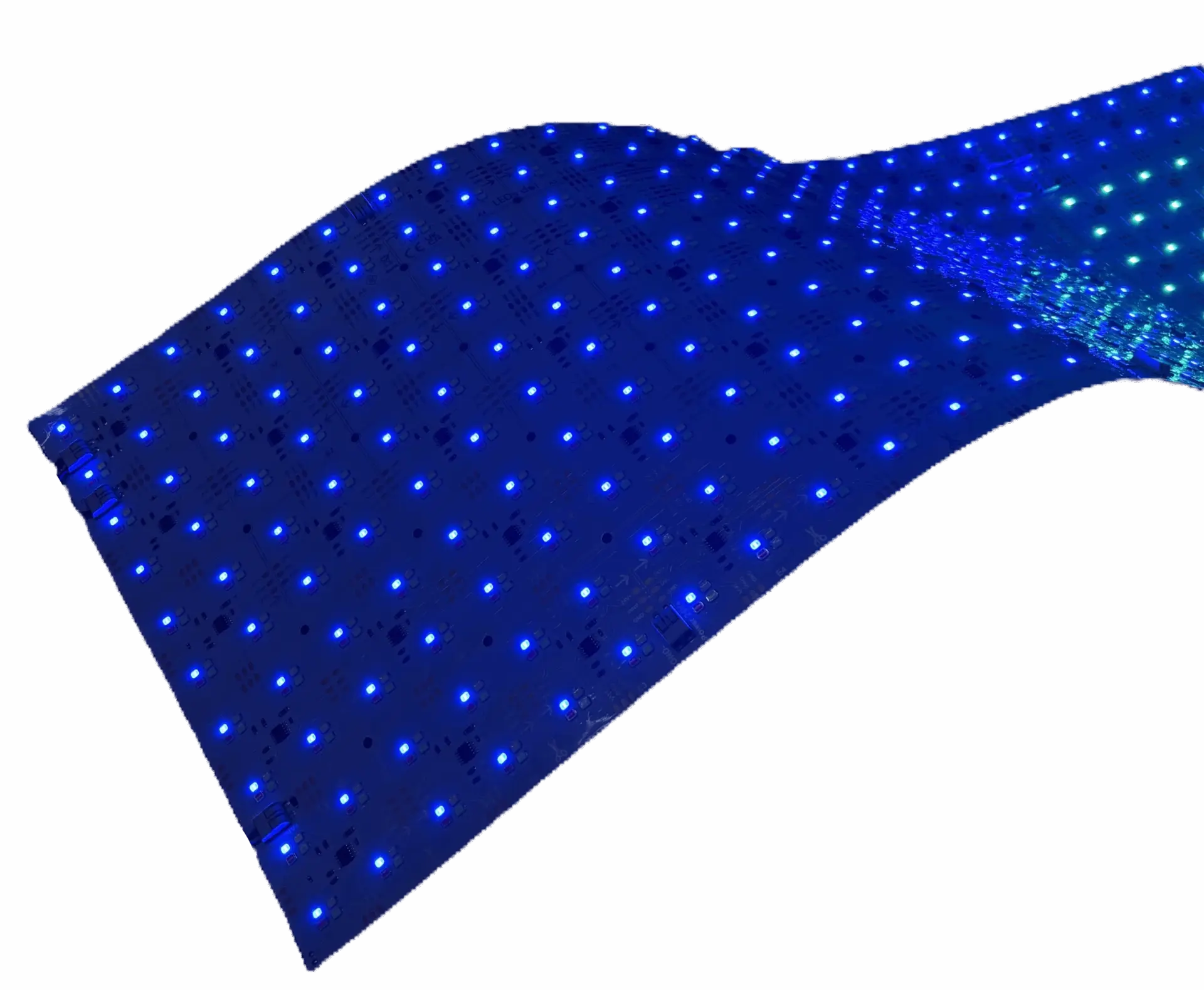
PIXX is the addressable-pixel LightWave® variant.
It uses 9.25″ × 19.8″ sheets containing 800 individually addressable RGBW LEDs controlled through SPI. This enables effects such as motion, gradients, animations, and programmable color changes across the illuminated surface.
Roll It! (Standard vs. High-Output)
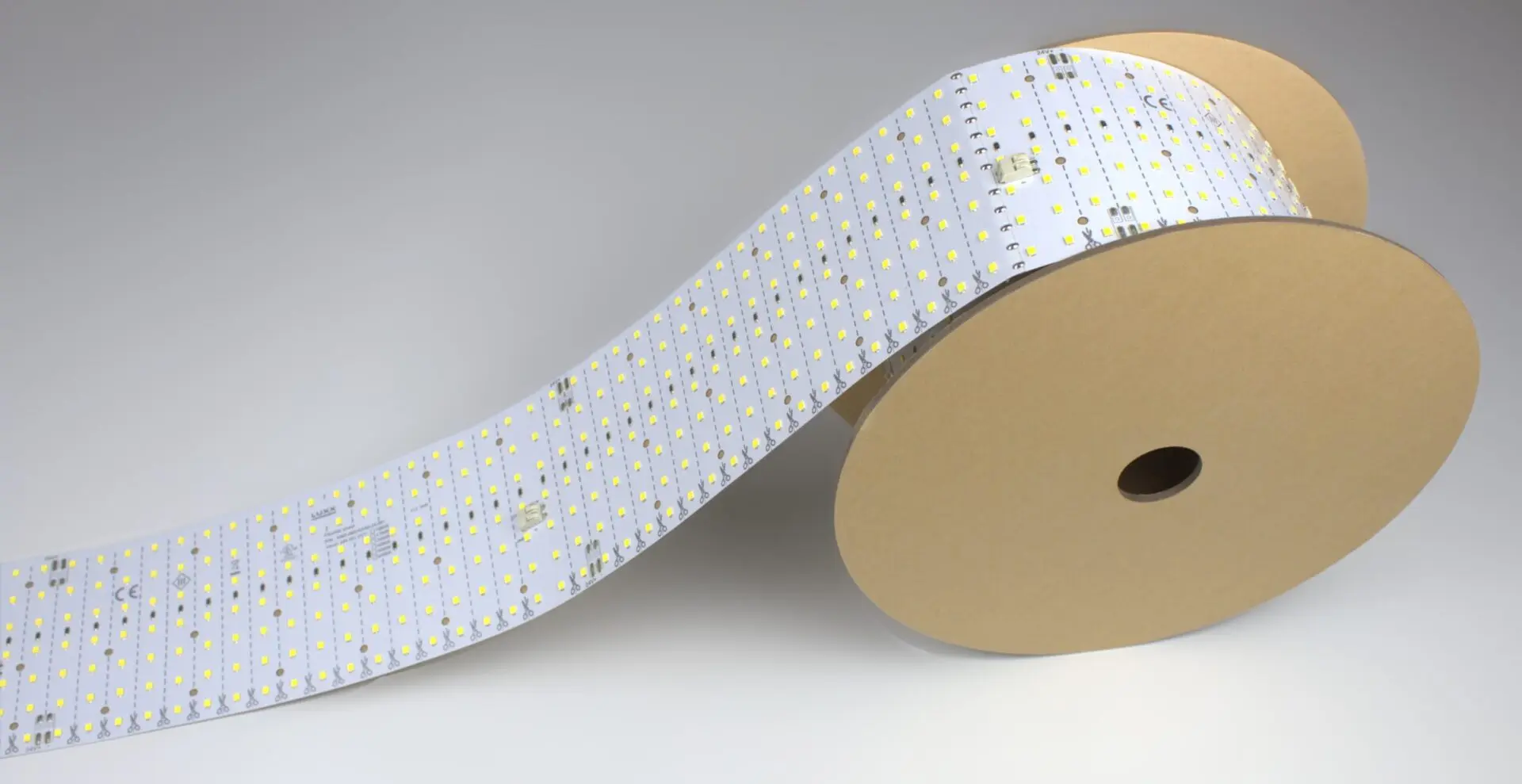
Roll It! is the continuous-roll LightWave® format designed for large-format and long-run applications.
The standard configuration is available in 3500K, 5000K, and 6500K, with a 2.15 W/ft power draw and 130 lm/W efficiency.
The wider-CCT configuration supports 1800K–6500K, uses 3.5 W/ft, and provides approximately 115–130 lm/W depending on CCT.
See LightWave Roll It! for the current product specifications.
40 ft Continuous Run
A 40 ft continuous run is the maximum single continuous length available for Roll It!.
Longer installations are divided into multiple runs. The continuous format can reduce the number of joins, connections, and drivers required compared with assembling a long installation from many separate modules.
Data-In / Data-Out (PIXX)
Data-In and Data-Out identify the direction of SPI data flow through PIXX sheets.
The printed arrows on each sheet show the required data direction. When cutting, connecting, or arranging PIXX sheets, maintain the correct sequence so the addressable pixel chain operates properly.